
Saudi strikes and tanker-rate reports meet a calm gas price
Reported missile interceptions, Houthi accusations and extreme tanker-rate reports could turn a risk premium into physical supply risk if cargoes stop moving.
 Tomás FerreiraEnergy, shipping and chokepoints
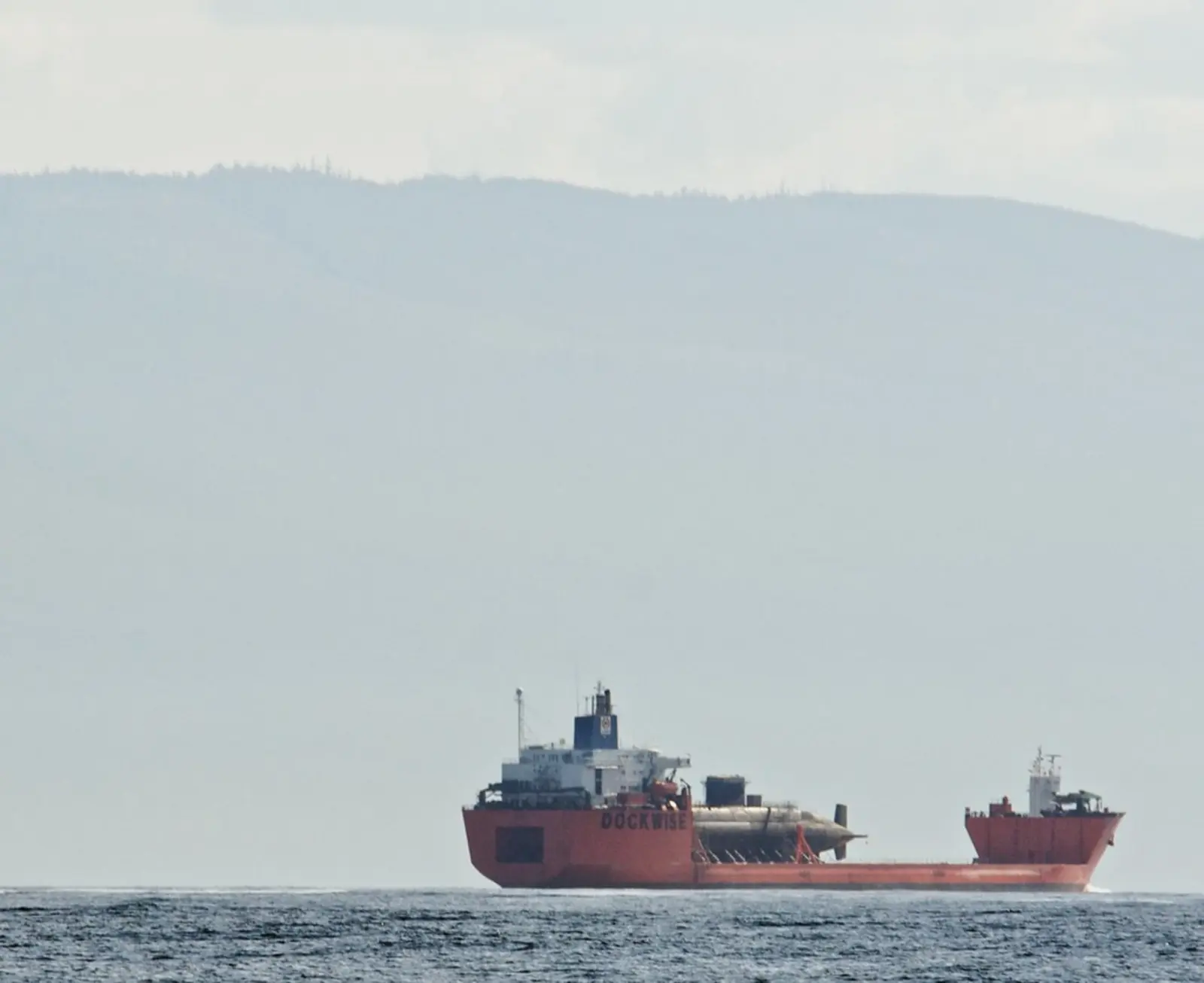
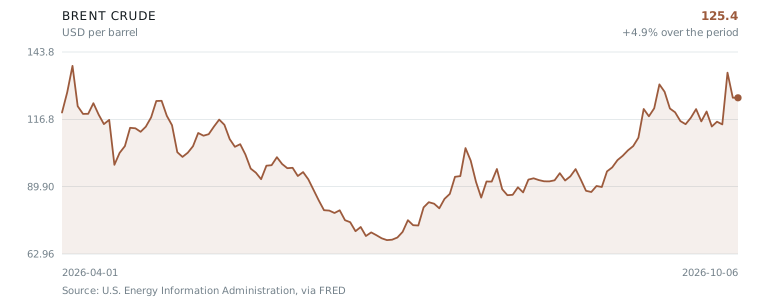
Brent was 125.44 on 6 October and Henry Hub gas was 3.03, setting oil risk against gas calm. Saudi Arabia said it intercepted missiles targeting Riyadh and Dhahran, while the Houthis accused it of attacking Sanaa. Reports of all-time tanker rates and Middle East LNG supply that has not recovered raise the question of whether the premium becomes physical.
A Brent price of 125.44 on 6 October and a Henry Hub print of 3.03 do not look like two readings from the same crisis. One is a market paying for the possibility that Gulf barrels become harder to replace. The other is a gas market that has not been forced to bid for missing Middle East cargoes. The task for physical traders is to work out which signal is lagging.
Saudi Arabia said it intercepted missiles targeting Riyadh and Dhahran, and that falling debris injured people. The Houthis, in turn, said Saudi Arabia was attacking the Yemeni capital Sanaa. The two accounts point in opposite directions: one frames the kingdom as defending its territory, the other as the attacker. For commodities, the market channel is risk. If attacks are directed at Saudi cities, traders have a reason to price the possibility that supply routes could be affected, even before any physical loss is confirmed.
Freight is doing the talking
The louder signal is not in the missile statements but in the freight market, if the current descriptions hold. By one account, the Middle East crisis has driven tanker rates to all-time highs. That is the kind of number that changes behaviour before any official inventory report does. When shipping becomes scarce and expensive, cargoes that once moved easily become marginal. Buyers delay. Sellers renegotiate. Barrels sit.
The longer the freight dislocation lasts, the more a risk premium stops being a line on a screen and starts being a physical queue.
The same account says record tanker rates have left heavy crude stranded in the Americas. The mechanism is simple: heavy crude is already a freight-sensitive barrel, and when the cost of moving it rises sharply, the netback can disappear. A stranded cargo is not merely a price inconvenience. It forces refiners to look elsewhere, and it forces producers to store, discount or defer. The longer the freight dislocation lasts, the more a risk premium stops being a line on a screen and starts being a physical queue.
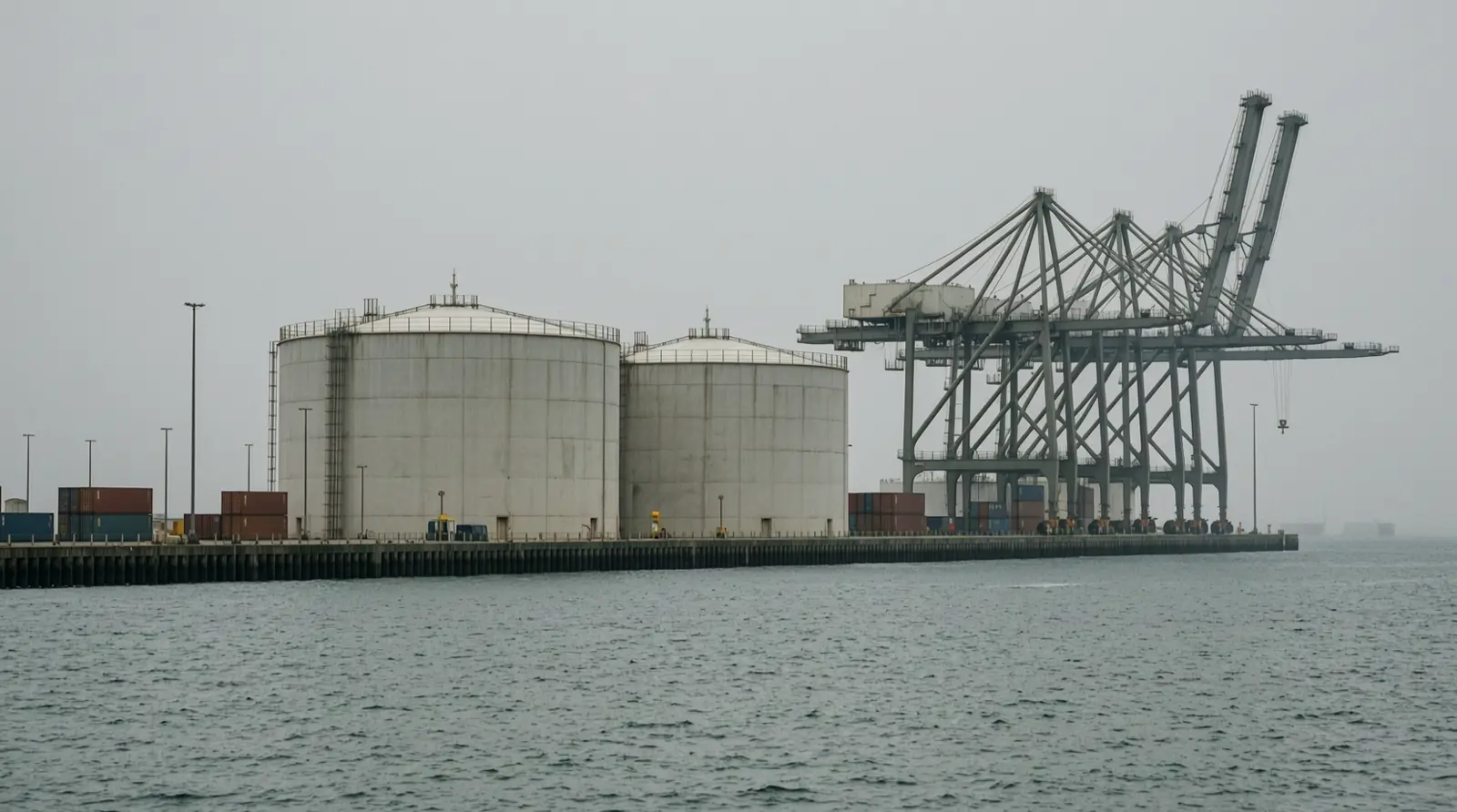
This is where the Middle East angle becomes direct. One account says that, seven and a half months after the Iran war choked oil and gas shipments through the Strait of Hormuz, Middle East LNG supply has not recovered meaningfully. If so, the problem is not a fresh shock but an old wound that has not closed. A chokepoint does not need to be closed today to keep markets nervous; it only needs to remain capable of disrupting again.
Gas refuses to confirm the panic
The gas price is the awkward witness. Henry Hub at 3.03 on 6 October is not the price of a market scrambling for replacement supply. It is more consistent with balance than with a structural hole in Middle East LNG. That does not mean the shipping reports are false. It means the gas market, at least in this snapshot, has not translated the Middle East disruption into a sustained bidding war.
Oil is less forgiving. Brent at 125.44 can reflect actual lost barrels, or it can reflect insurance against losing them. The difference is visible in physical behaviour: freight rates, cargo delays, storage decisions and contract renegotiations. If tankers are truly at all-time highs and heavy crude is stuck in the Americas, the oil market is already paying for scarcity in the only language it respects.
The open question is whether the gas market remains calm because supply is genuinely adequate, or because the disruption has not yet reached the right cargoes, routes and contract months. If the next few weeks show more delayed loadings, more rerouting and more bids for distant barrels, the gap between Brent and Henry Hub will close. If not, the missile headlines may remain a premium rather than a shortage.
- 01Brent was 125.44 on 6 October.
- 02Henry Hub gas was 3.03 on the same date.
- 03Saudi Arabia said it intercepted missiles targeting Riyadh and Dhahran, and that falling debris injured people.
- 04The Houthis said Saudi Arabia was attacking Sanaa.
- 05Accounts describe all-time tanker rates, heavy crude stranded in the Americas and Middle East LNG supply that has not recovered.
Interpretation, not reporting. The facts above carry their tiers; this is one correspondent’s reading of them.
The market is pricing insurance, not confirmed loss. I see Brent at 125.44 and accept that the Gulf missile reports add a legitimate risk premium. But Henry Hub at 3.03 refuses to play along. If Middle East LNG supply were truly missing in a way that forced immediate replacement buying, gas should show more stress than this. The freight story is where I lean: if tanker rates are at all-time highs and heavy crude is stranded in the Americas, the disruption is already moving from headlines to logistics. That would matter more than any single interception. What would change my mind is simple: if gas stays calm while oil remains elevated, the oil premium may be geopolitical rather than physical. If delayed cargoes and rerouting multiply, the premium becomes a supply problem.
— Tomás Ferreira
Every claim in this article, and what it rests on
We do not ask you to take our word for it. Each statement below carries its tier and its sources. Where sources disagree, you get both accounts and what would settle it.
The Brent price was 125.44 on 2026-10-06.
The Henry Hub gas price was 3.03 on 2026-10-06.
Saudi Arabia said it intercepted missiles targeting Riyadh and Dhahran.
Falling debris from the missile interceptions injured people.
The Houthis said Saudi Arabia was attacking the Yemeni capital Sanaa.
The Middle East crisis has driven tanker rates to all-time highs.
Record tanker rates have left heavy crude stranded in the Americas.
Middle East LNG supply has not recovered meaningfully seven and a half months after the Iran war choked oil and gas shipments through the Strait of Hormuz.
The case against this story
Written by an adversarial reviewer, not the correspondent
The strongest case against this story is that it stitches together disparate events into a single escalating-crisis narrative when the evidence may not support that linkage. The Saudi-Houthi missile exchanges are presented as current events, yet the LNG claim references an 'Iran war' from seven and a half months earlier — a different timeframe and potentially a different conflict entirely. The superlative language throughout ('all-time highs,' 'stranded,' 'choked') may overstate what the evidence actually shows. Most critically, the story is internally inconsistent: if Middle East LNG supply has not recovered and tanker rates are at all-time highs, a Henry Hub gas price of just 3.03 is surprisingly low — gas markets do not appear to be pricing in the severe supply disruption the story describes. A gas price near 3.00 is broadly consistent with normal market conditions, not a crisis. Similarly, Brent at 125.44 is elevated but could reflect geopolitical risk premium rather than actual physical shortage. The story also presents Saudi Arabia's account of intercepting missiles without independent verification, while the Houthi counter-claim that Saudi Arabia is attacking Sanaa is framed as a mere accusation, creating an asymmetry that favors the Saudi narrative without evidence warranting it.
Who benefits from this framing: Oil and gas producers benefit from higher prices and perceived scarcity, as do tanker owners if readers believe rates are at record levels. Defense contractors benefit from any narrative of escalating Middle East conflict that could justify further arms sales. Saudi Arabia benefits from a framing that emphasizes its defensive actions — intercepting missiles — while treating the Houthi accusation that Saudi Arabia is attacking Sanaa as merely a claim, creating an asymmetry that makes Saudi Arabia look like the victim. Iran hawks benefit from the 'Iran war' narrative, which supports a harder line against Tehran. LNG exporters with long-term contracts benefit from perceptions of supply disruption, which can justify higher pricing in future negotiations. Finally, financial speculators holding long positions in crude oil or shipping equities benefit if readers believe the crisis is deepening rather than stabilizing.
Report an error in this article
Subscriptions open at launch
Global Materials Review will be a paid publication. Reading is free while we build the archive — leave an address and we will write to you once, when subscriptions open.