
Saudi allocations to Europe meet tanker bottlenecks in the Americas
Full Saudi nominations for Europe may not ease feedstock stress if freight costs keep heavy crude stranded in the Americas.
 Tomás FerreiraEnergy, shipping and chokepoints

Brent stood at $125.44 and WTI at $96.24 on 6 October, a $29.20 spread that points to location rather than total supply. Saudi Aramco is expected to meet all European oil supply requests in November, but market participants say soaring tanker rates are stifling exports and leaving dense heavy crude piling up in the Americas. The result is a market where allocations can be met in one region while barrels remain stranded in another.
$29.20 separated Brent from WTI on 6 October, with Brent at $125.44 and WTI at $96.24. That is less a normal price relationship than a map of constraint: one marker is being paid for mobility, the other is being discounted because it cannot easily leave.
The market is being handed two pictures at once. Saudi Aramco will fully meet European oil supply requests in November, according to market participants, and three EU refineries are expected to receive all requested crude. Soaring tanker freight rates have stifled crude exports, market participants say, leaving dense heavy crude piling up in the Americas.
At face value, those accounts collide. If exports are stifled, how can supply be fully met? The answer, if there is one, is likely to be found in transport rather than production: allocations can be fulfilled where ships are available, while other barrels remain stuck where freight costs make movement uneconomic.
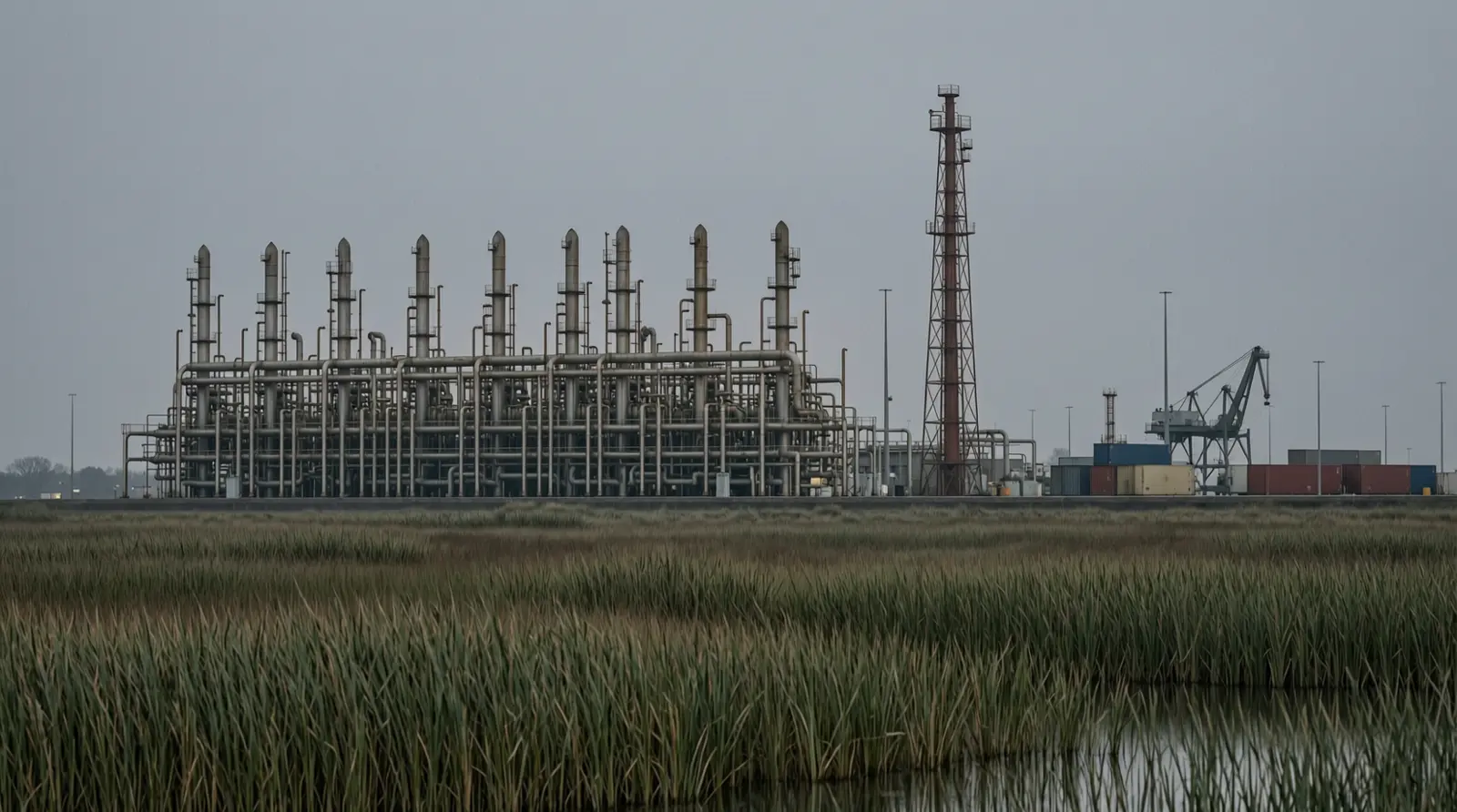
Full nominations do not move themselves
A nomination is a promise on paper. A cargo is a ship, a loading window, a port draft and a discharge plan. When tanker rates are soaring, the distance between those two things widens. The cost of moving a barrel can become the deciding variable, not the availability of the barrel.
Allocation solves availability; it does not solve freight.
Europe's expected Saudi supply therefore needs to be read through freight. If the required tankers can be secured, European refiners enter November with fewer feedstock gaps. If freight stays expensive, even allocated cargoes can arrive late, cost more or force buyers to choose between margin and run rates.
The Americas show the opposite pressure. Dense heavy crude is piling up there, according to market descriptions, which suggests that the problem is not a lack of supply but a lack of economic exit. Heavy crude is not easily substituted into any refinery; it needs buyers with the right units. When those buyers cannot be reached cheaply, the crude sits.
The spread is the freight bill
The Brent-WTI gap gives that dislocation a price. Brent carries the value of crude that can reach waterborne markets; WTI reflects barrels tied to North American infrastructure. A $29.20 difference is the market saying that location, not just volume, is scarce.
For refiners, this turns procurement into a spatial problem. A European refinery may have its November requests met, but delivered cost still depends on tanker rates. An American refinery may see heavy crude accumulating nearby, yet still face constrained economics if the barrel cannot move to the best outlet.
Experts expect full normalization of oil exports only in 2027. If that view holds, the current pattern is not a short disruption but a prolonged mismatch between supply and transport. The world may have enough crude in aggregate, while still lacking the ships to place it where refining demand is strongest.
Watch the ships, not the paperwork
The open question is whether the European allocation story and the tanker bottleneck story can remain true together. They can, but only if the market is segmented: Saudi barrels flow to Europe on secured transport, while heavier American barrels wait for freight to become affordable again.
The signals to watch are physical. Loading schedules, storage levels in the Americas and tanker rates will say more than any assurance of supply. If freight eases, the pile of heavy crude should thin and the Brent-WTI spread should narrow. If it does not, full nominations in Europe will coexist with stranded barrels elsewhere.
Allocation solves availability; it does not solve freight.
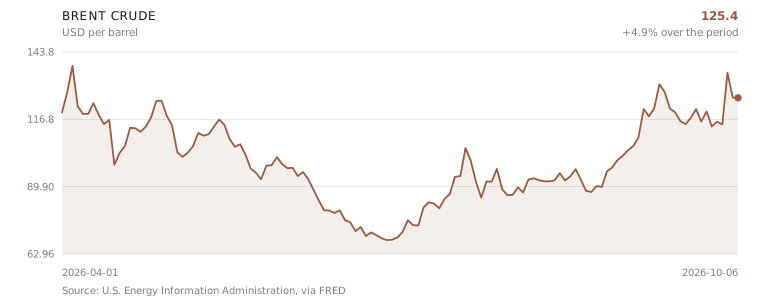
- 01Brent was $125.44 and WTI was $96.24 on 6 October, leaving a $29.20 spread.
- 02Saudi Aramco is expected to meet all European oil supply requests in November.
- 03Three EU refineries are expected to receive all requested crude.
- 04Market participants say soaring tanker freight rates have stifled crude exports.
- 05Dense heavy crude is reported piling up in the Americas, and experts expect full export normalization only in 2027.
Interpretation, not reporting. The facts above carry their tiers; this is one correspondent’s reading of them.
The bottleneck is not crude; it is the cost of moving crude. If Saudi allocations are real, Europe's November feedstock looks covered, but that does not make the market balanced. High tanker freight rates can turn a nominal supply promise into a regional solution while heavy barrels remain stuck in the Americas. That is why the Brent-WTI gap matters: $29.20 is the market pricing distance, risk and delay, not just production. I would watch tanker rates before any statement about export normalization. If freight eases and heavy crude stops piling up, the 2027 normalization call may prove too cautious. If rates stay high, full European nominations can coexist with stranded barrels and uneven refining feedstock. What would change my view is simple: a visible fall in freight costs and a narrowing of the price spread without a new supply shock. Until then, the physical map beats the allocation sheet.
— Tomás Ferreira
Every claim in this article, and what it rests on
We do not ask you to take our word for it. Each statement below carries its tier and its sources. Where sources disagree, you get both accounts and what would settle it.
Brent crude was $125.44 on 2026-10-06.
WTI crude was $96.24 on 2026-10-06.
Saudi Aramco will fully meet European oil supply requests in November 2026.
Saudi Aramco will supply three EU refineries with all requested oil in November 2026.
Soaring tanker freight rates have stifled crude exports.
Dense heavy crude is piling up in the Americas.
Experts expect full normalization of oil exports only in 2027.
The case against this story
Written by an adversarial reviewer, not the correspondent
The story is internally contradictory. Claims 3 and 4 assert Aramco will 'fully meet' European supply requests in November 2026, yet claim 5 says soaring tanker rates have 'stifled' crude exports. Both cannot simultaneously be true at face value—if exports are stifled, full supply fulfillment is impossible; if supply is fully met, exports are not stifled. The narrative also leans heavily on unverified forward-looking claims (ledger 3, 4, 7) while anchoring credibility on two specific price points (ledger 1, 2) whose $29.20 Brent-WTI spread is historically anomalous and unexplained. A reader cannot reconcile the picture of robust supply with stifled exports and piling crude without additional evidence bridging those tensions.
Who benefits from this framing: Oil traders and speculators who profit from perceived supply uncertainty and price volatility; Saudi Aramco if the framing portrays it as a reliable supplier fulfilling all European requests despite market disruption; refiners who can cite the narrative to justify higher product margins; and any party with short positions in tanker freight or crude-exposed assets who benefits from the 'stifled exports' and 'piling crude' framing.
Report an error in this article
Subscriptions open at launch
Global Materials Review will be a paid publication. Reading is free while we build the archive — leave an address and we will write to you once, when subscriptions open.