
Ryazan strike and Black Sea drones strain diesel as Bulgaria split reported
A reported refinery strike, Black Sea shipping risk and a reported EU diesel split all press on the same fuel chain.
 Tomás FerreiraEnergy, shipping and chokepoints
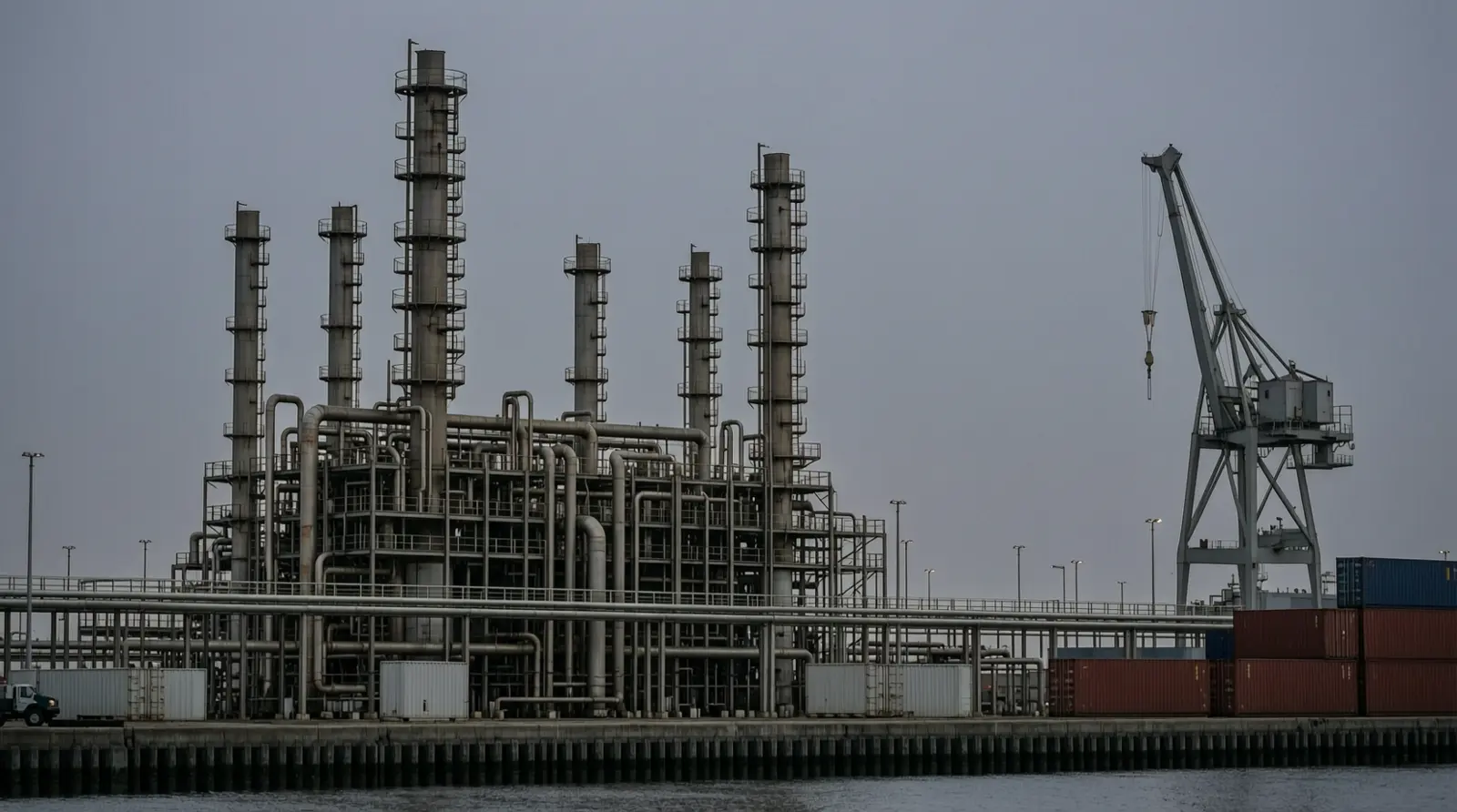
Brent crude was $125.44 on 6 October, while WTI was $96.24 and $29.20 below it. Reports say Ukrainian drones struck Russia's Ryazan refinery and Black Sea attacks are adding to energy and shipping strains. Reports also say Bulgaria broke ranks with the EU over a Trump-Putin diesel deal announced last week.
Brent crude was $125.44 on 6 October. WTI crude was $96.24 on the same day, leaving a $29.20 gap between the two benchmarks. That spread is the only hard number in the picture, and it sits beside a set of reports that have not been independently confirmed.
The gap between the two benchmarks is more than arithmetic. It is a reminder that oil is priced in regional balances, and that a shock to one balance can change what buyers pay elsewhere. That matters now.
A reported Ryazan strike
According to reports, Ukrainian drones struck Russia's Ryazan refinery on Thursday. The same reports described the strike as ending a brief pause in Ukrainian attacks. If those accounts are accurate, the market will need to separate the fact of a strike from its duration and scope. A refinery incident can matter through lost output, or it can matter mainly through the risk that output stays offline longer than expected.
The reports combine physical risk and policy risk in the same diesel complex.
A cargo delayed is a cargo unavailable for a loading window.
The first channel is physical. If refining is interrupted, fuel supply can tighten even while crude remains available. The second channel is expectation. Traders may bid for prompt supply before knowing the full extent of any damage. In that case, prices can move on uncertainty, then adjust later.
Black Sea reports and shipping
Other reports say Black Sea drone attacks are adding to global energy strains and to shipping strains. If true, the mechanism would run through time and cost. A route that becomes riskier can require slower movement, longer waits or different routing. Each of those changes turns days into supply-chain friction.
For physical markets, days are not neutral. A cargo delayed is a cargo unavailable for a loading window. A voyage extended is a vessel tied up longer than planned. Those effects can show up in freight, in waiting times and in the cost of moving product from one basin to another.
The important point is that shipping strain does not require a total stoppage. It can arrive as a series of small additions: higher risk charges, more cautious routing, and longer decision times. If the Black Sea reports are confirmed, those additions would matter because they accumulate across repeated voyages.
Bulgaria and the diesel line
The most difficult part of the picture is political. Reports say a Trump-Putin diesel deal was announced last week, and that Bulgaria broke ranks with the EU over it. Those accounts are not confirmed here, but they touch the area where policy meets physical supply.
If one EU member is perceived to be moving away from a common position, the effect can be operational before it is legal. Counterparties may ask harder questions about contracts, compliance and delivery. Diesel flows can then become slower not because cargoes are missing, but because paperwork and approvals take longer.
This leaves traders with three separate threads: a reported refinery strike, reported Black Sea shipping strain and a reported split over diesel policy. Each one alone could be manageable. Together, they point to the same vulnerability: diesel supply depends on both physical movement and political consent.
The thing to watch is whether the reports turn into observable market behaviour. Freight, product spreads, waiting times and cargo confirmations will show whether the risk is being priced. Until then, the market is moving on numbers and reports that do not yet fully agree.
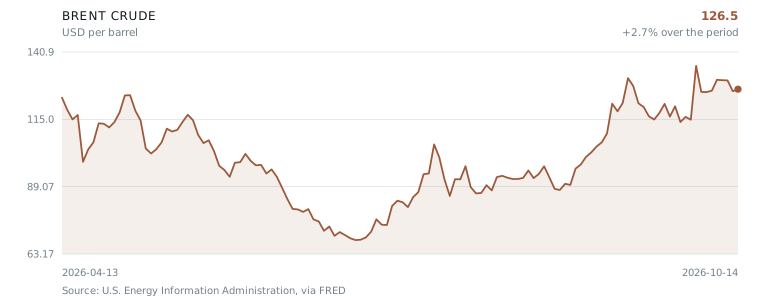
- 01Brent crude was $125.44 on 6 October.
- 02WTI crude was $96.24 on 6 October, $29.20 below Brent.
- 03Reports say Ukrainian drones struck Russia's Ryazan refinery on Thursday.
- 04Reports say Black Sea drone attacks are adding to energy and shipping strains.
- 05Reports say Bulgaria broke ranks with the EU over a Trump-Putin diesel deal announced last week.
Interpretation, not reporting. The facts above carry their tiers; this is one correspondent’s reading of them.
The diesel chain, not crude, is the weak point here. I can absorb a single refinery incident as localised unless units stay down for weeks. But put Ryazan beside Black Sea shipping risk and an unresolved EU diesel split, and the system loses optionality. If a cargo cannot move on time, the prompt market pays; if policy diverges, counterparties start re-papering trades. What would change my view is simple: if Black Sea transits continue without added insurance or waiting days, and if the reported diesel deal produces no actual cargo flows, the premium should fade. If not, freight and product spreads will tell me before the reports settle. That is where I would keep my eyes first: reports, freight and days.
— Tomás Ferreira
Every claim in this article, and what it rests on
We do not ask you to take our word for it. Each statement below carries its tier and its sources. Where sources disagree, you get both accounts and what would settle it.
Brent crude was $125.44 on 2026-10-06.
WTI crude was $96.24 on 2026-10-06.
Ukrainian drones struck Russia's Ryazan refinery on Thursday.
The Ryazan refinery strike ended a brief pause in Ukrainian attacks.
Black Sea drone attacks are adding to global energy strains.
Black Sea drone attacks are adding to shipping strains.
Bulgaria broke ranks with the EU over the Trump-Putin diesel deal.
The Trump-Putin diesel deal was announced last week.
The case against this story
Written by an adversarial reviewer, not the correspondent
The story chains together several extraordinary and unverified claims into a single dramatic narrative. A 'Trump-Putin diesel deal' is presented as fact without any official confirmation from either government, and Bulgaria's alleged split from the EU over it is similarly unconfirmed. Specific oil prices ($125.44 Brent, $96.24 WTI) are stated at the highest confidence level without cited market data. The causal links between Black Sea drone attacks and 'global energy strains' or 'shipping strains' are asserted without analytical evidence from any energy or maritime authority. The claim that the Ryazan strike 'ended a brief pause' assumes a pattern that is not demonstrated with any incident timeline. The overall picture — a Trump-Putin energy deal, EU fragmentation, global energy and shipping crisis — is built on claims that each individually require stronger evidence than is provided, and the accumulation of unverified extraordinary claims makes the composite narrative unreliable.
Who benefits from this framing: If a reader believes this framing, several parties benefit: energy market speculators profit from fear-driven price expectations and volatility; political actors seeking to portray Trump as secretly cooperating with Putin gain a powerful narrative tool; those advocating for increased military spending or deeper intervention in the Ukraine conflict can cite the alleged global energy and shipping impacts; and parties interested in fracturing EU unity — including Russia — benefit from the unverified claim that Bulgaria broke ranks over a Trump-Putin deal.
Report an error in this article
Subscriptions open at launch
Global Materials Review will be a paid publication. Reading is free while we build the archive — leave an address and we will write to you once, when subscriptions open.