
Oil's Iran premium collides with shadow-fleet relief
A wide Brent-WTI gap, possible tanker sanctions relief and Moscow's diesel signal all pull on physical supply.
 Tomás FerreiraEnergy, shipping and chokepoints

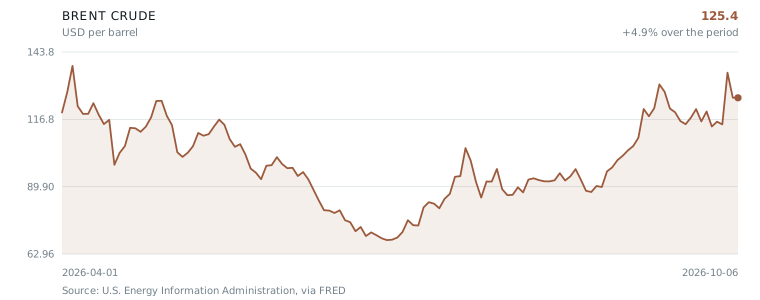
Brent and WTI stood at 125.44 and 96.24 on 6 October, leaving a roughly $29 spread. The G20 meeting in Thailand was framed by the Iran conflict, which officials said was pushing energy prices higher and clouding the global economy. A possible easing of shadow-fleet tanker sanctions and Moscow's diesel remarks add a second, uncertain signal.
On 6 October, Brent crude stood at 125.44 and WTI crude at 96.24. That is a gap of about $29 between the two main benchmarks, and it changes the arithmetic for anyone chartering a tanker, running a refinery or bidding for a cargo.
The price action was described as a retreat from the previous day's highs, but the level still carried a risk premium. The market is being asked to price three different risks at once: war, sanctions relief and a diesel deal.
A $29 gap in the crude benchmark
G20 finance ministers and central bankers gathered in Thailand amid fallout from the Iran war, and officials warned that the conflict was driving energy prices higher while casting uncertainty over the global economy. For physical buyers, that warning translates into a simple question: which barrels become expensive first if Gulf flows are threatened?
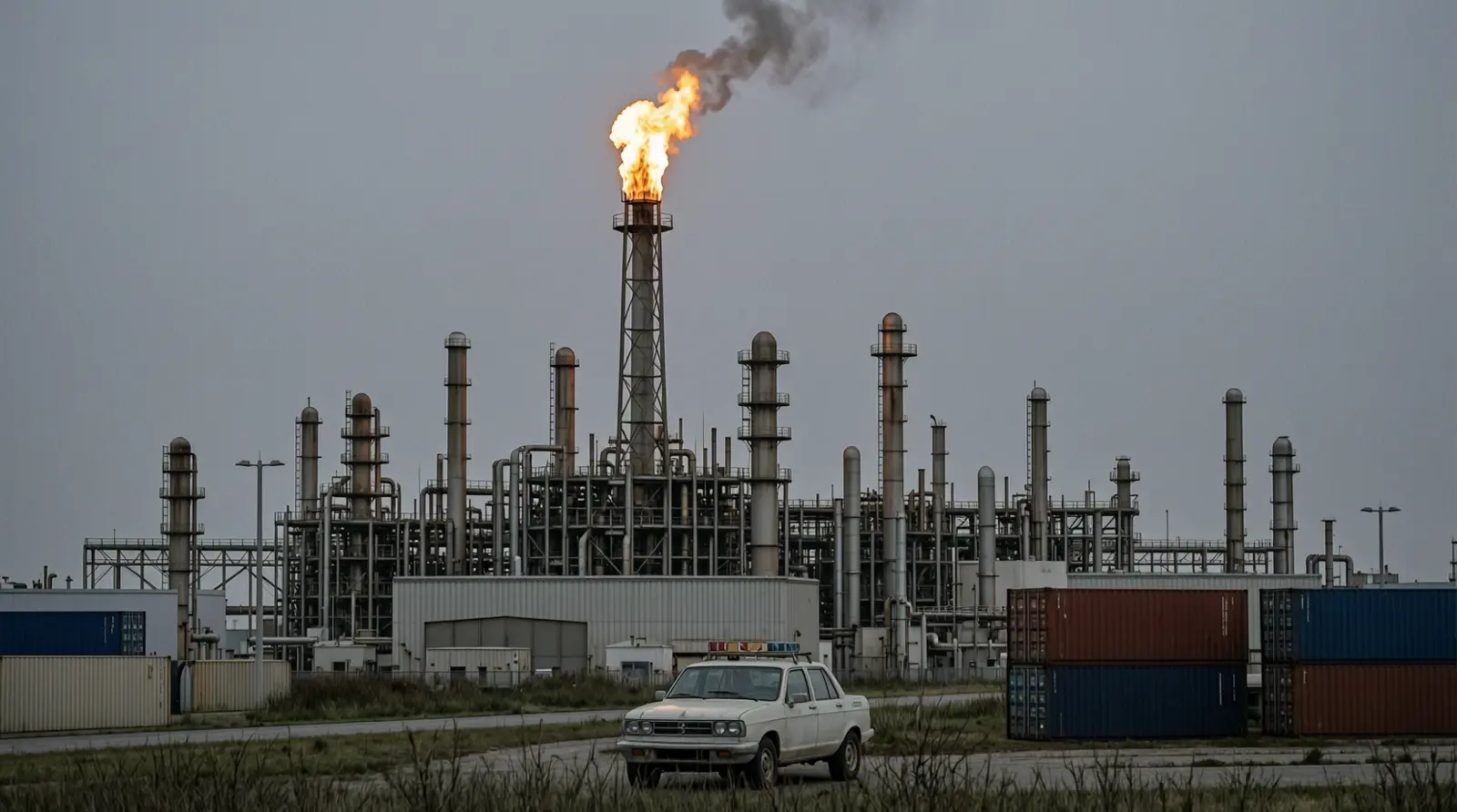
Brent usually answers that question before WTI. A Brent price of 125.44 against WTI at 96.24 suggests the market is paying up for waterborne supply that can be diverted, while the landlocked benchmark lags. The spread also needs an explanation tied to physical flows. The spread also changes refining incentives. A refinery able to process heavier or more sour grades may see its margin swing with the gap, not with the flat price.
The retreat from the previous day's highs matters because it shows the premium is not static. If conflict risk eases, the front of the curve can deflate quickly. If it does not, every extra day of uncertainty adds to freight, insurance and cargo bids.
The market is being asked to price three different risks at once: war, sanctions relief and a diesel deal.
Tanker relief would move barrels, not headlines
The more concrete lever is the fleet. The market was left to weigh a suggestion that President Trump was considering lifting sanctions on shadow-fleet tankers. A suggestion is not a policy. If that happened, the effect would be measured in vessels, not statements.
A sanctioned tanker cannot easily load, insure or discharge. Remove that constraint and a ship that was effectively sidelined can re-enter the market. For crude and products, that adds available tonnage at the margin. It also shortens the distance between discounted barrels and buyers willing to take them.
This is where the story becomes spatial. A shadow-fleet tanker in ballast is a floating option. If sanctions relief appears credible, owners can move ships toward loading ports, and traders can structure cargoes around them. If the relief is uncertain, the same ships stay in limbo, and the discount on affected crude remains wide because buyers demand compensation for settlement risk.
The possible relief also cuts across the war premium. Higher energy prices from the Iran conflict tighten supply; releasing shadow-fleet capacity would loosen it. The two forces pull in opposite directions, which is one reason the price tape can look unstable.
Moscow's diesel signal meets sanctions friction
Novak's remarks add a third thread. Russian Deputy Prime Minister Alexander Novak called the diesel agreement with the United States a positive signal for Russia's economy. He also said the agreement was linked to higher Russian refining and production.
Those words matter because diesel is not an abstract. It is the fuel of trucks, farms, construction and military logistics. A signal that Russian refining may run higher implies more product available for export, or at least more confidence that output can be sold.
But the statement also raises a practical question: how would a diesel arrangement with Washington work while sanctions shape trade flows? The answer is not in the remarks. Without details on licensing, payments, insurance and destinations, the market can only treat the statement as direction, not volume.
The strongest test is whether physical flows follow. If Russian diesel moves through channels that buyers can finance and insure, the signal becomes real. If not, it remains rhetoric. For now, the price board shows tension rather than resolution: Brent at 125.44, WTI at 96.24, and a set of policy signals that could either tighten or loosen the barrel balance within the same quarter.
- 01Brent was 125.44 and WTI was 96.24 on 6 October.
- 02G20 finance ministers and central bankers met in Thailand amid fallout from the Iran war.
- 03Officials said the Iran conflict was driving energy prices higher and creating economic uncertainty.
- 04Alexander Novak called a diesel agreement with the United States positive for Russia's economy.
- 05President Trump was reportedly considering lifting sanctions on shadow-fleet tankers.
Interpretation, not reporting. The facts above carry their tiers; this is one correspondent’s reading of them.
The market is not pricing a single shock; it is pricing three cross-currents. Brent at 125.44 against WTI at 96.24 tells me the premium is concentrated in waterborne barrels, not in the whole complex. The G20 language about the Iran conflict points to demand for insurance, freight and time, while the suggestion that President Trump was considering lifting sanctions on shadow-fleet tankers points the other way: more ships for barrels that already struggle to move. Novak's diesel remarks sit in between. If they translate into higher Russian refining and production, they add product supply; if they remain words, they change nothing. I would watch the spread first. If the Brent-WTI gap narrows while prices hold, the market may be finding extra supply. If it stays wide, the war premium is still doing the work. What would change my view is simple: visible tanker movements and diesel flows, not speeches.
— Tomás Ferreira
Every claim in this article, and what it rests on
We do not ask you to take our word for it. Each statement below carries its tier and its sources. Where sources disagree, you get both accounts and what would settle it.
Brent crude was 125.44 and WTI crude was 96.24 on 2026-10-06.
Russian Deputy Prime Minister Alexander Novak called the diesel agreement with the United States a positive signal for Russia's economy.
Alexander Novak said the diesel agreement with the United States is linked to higher Russian refining and production.
G20 finance ministers and central bankers gathered in Thailand amid fallout from the Iran war.
The Iran war conflict was driving energy prices higher.
The Iran war conflict was casting uncertainty over the global economy.
Crude oil prices retreated from the previous day's highs.
President Trump was considering lifting sanctions on shadow-fleet tankers.
The case against this story
Written by an adversarial reviewer, not the correspondent
The story weaves together several questionable threads into a narrative that conveniently benefits Russia. The Brent-WTI spread of approximately $29 is historically unusual and unexplained. A US-Russia diesel agreement contradicts the sanctions framework that has been in place. The claim that Trump was considering lifting sanctions on shadow-fleet tankers directly benefits Russia and lacks direct evidence. The 'Iran war' is referenced as established fact across multiple claims but may not be well-documented. The overall narrative presents Russia positively — a diesel agreement is 'positive for Russia's economy,' linked to 'higher Russian refining and production,' and sanctions on shadow-fleet tankers might be lifted. This reads like a narrative that benefits Russian interests by normalizing energy cooperation with the US despite sanctions.
Who benefits from this framing: Russia benefits most from this framing. The diesel agreement is presented as positive for Russia's economy and linked to higher refining and production. The potential lifting of shadow-fleet tanker sanctions would directly benefit Russian oil exports. The narrative normalizes Russia-US energy cooperation despite ongoing sanctions, and the 'positive signal' framing undermines the sanctions regime's effectiveness.
Report an error in this article
Subscriptions open at launch
Global Materials Review will be a paid publication. Reading is free while we build the archive — leave an address and we will write to you once, when subscriptions open.