
Kabila, M23 and a UN peace window test Congo supply corridors
Diplomatic progress and worsening security are pulling the same corridor in opposite directions, with fuel and copper prices showing where costs could bite.
 Annika RautioMetals, mining and refining
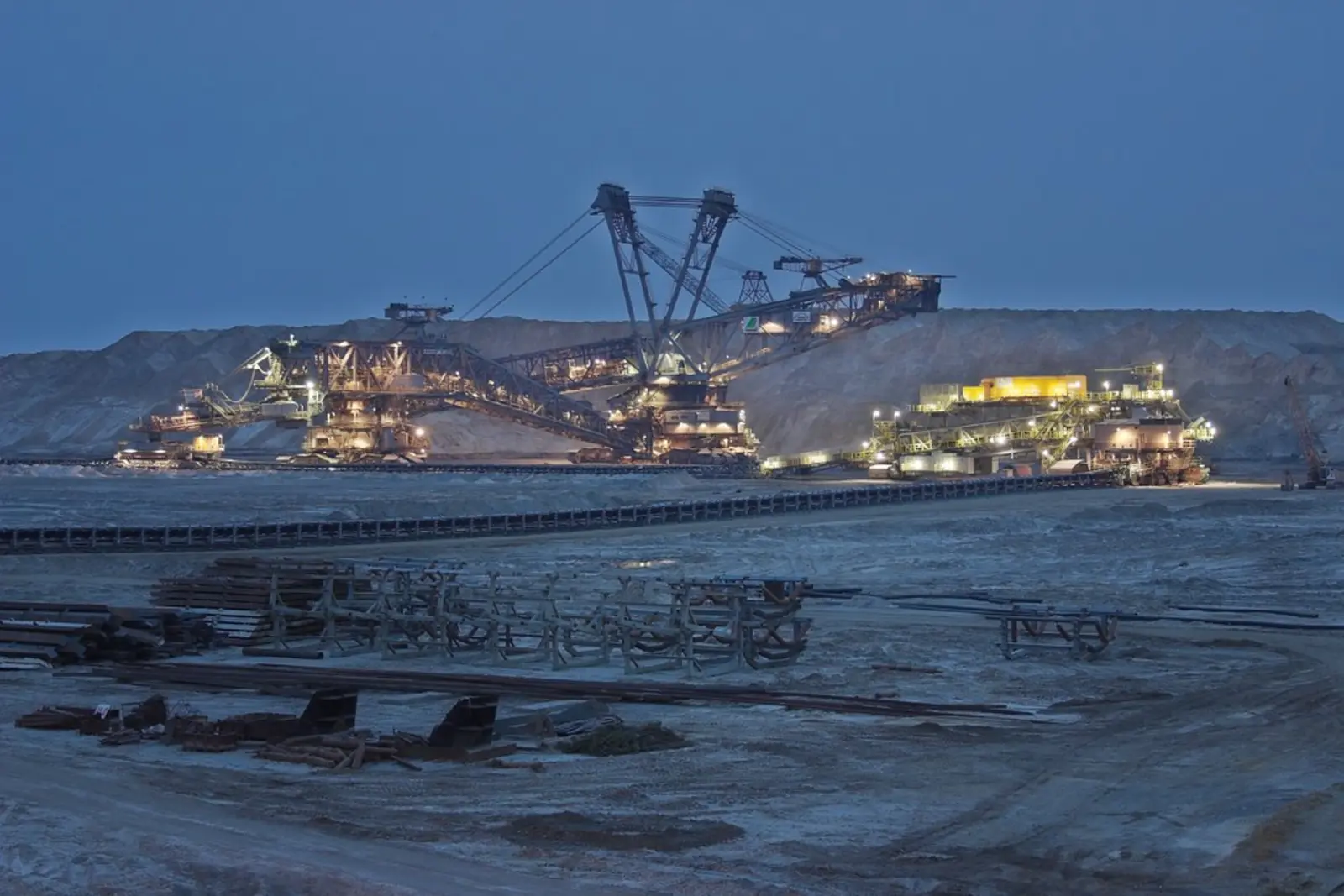
A UN official sees a window for peace in the Democratic Republic of Congo, while the UN envoy warns that security and humanitarian conditions are worsening. The claim that former president Joseph Kabila has aligned with M23 rests on a Kinshasa accusation, leaving corridor risk difficult to price. Copper and Brent references show where energy and metal costs could feel any disruption.
A UN official says there is a window of opportunity for peace in the Democratic Republic of Congo, while the UN envoy warns that security and humanitarian conditions are worsening. That contradiction is the market’s problem. Diplomacy can open a route, but only security can keep it open.
A peace window with a cracked hinge
A UN official said there is a window of opportunity for peace in the Democratic Republic of Congo, and the UN envoy praised progress in diplomatic efforts. But the envoy also said the security situation is worsening and the humanitarian situation is worsening. For supply chains, those are not parallel facts. They are competing signals.
The mechanism is straightforward. A diplomatic opening can lower the political cost of moving goods, ease border friction and encourage insurers to re-engage. Worsening security does the opposite: it raises escort costs, forces rerouting, delays convoys and makes insurers price more risk into every leg. The difference between a corridor that functions and one that merely exists on a map is often the difference between these two sentences.
Energy costs add another layer. Brent was at 125.44 on 6 October. For any long export chain, fuel is not a background number. It enters drilling, hauling, generator costs and port logistics. If diesel and transport costs rise while security deteriorates, even a stable metal price can leave producers with thinner margins.
Until those answers change, the diplomatic window remains a call option, not a delivered cargo.
Kabila’s shadow over the corridor
The most politically charged assertion is that former DRC president Joseph Kabila has aligned with M23 rebels. That assertion should not be treated as settled by the accusation alone. The Kinshasa government has accused Joseph Kabila of ties to armed rebels, and that accusation is the visible basis for the alignment narrative.
Why does this matter to a metals desk? Because a former president carries legitimacy, networks and bargaining weight. If the alignment claim is credible, it could complicate any ceasefire, broaden the conflict’s political surface and make corridor guarantees harder to enforce. If it is primarily a political accusation, it still matters: Kinshasa’s framing can shape arrests, sanctions debates, military posture and the willingness of outside mediators to press for talks.
This is where the story’s weakest point becomes its most important one. A peace process built on a deteriorating security picture and an unresolved political rupture is fragile. Markets often price the headline first and the enforcement later. In Congo, enforcement is the trade.
What a buyer can actually use
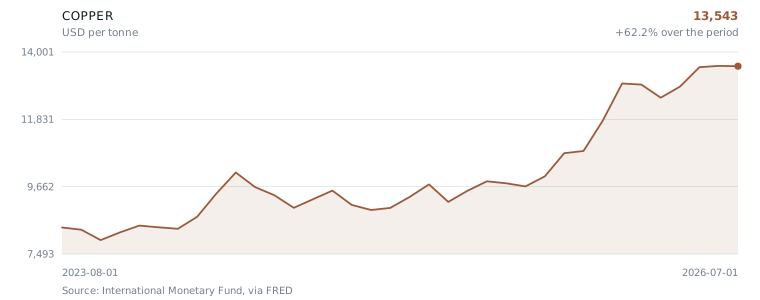
The available copper reference for 1 July was 13,542.820869565219. With twelve decimal places, the number raises a question about whether it is a raw exchange quote or a calculated series, so it should be used as a reference level, not as proof of a single market moment. Still, it gives a marker for copper, the metal in the available price series.
The practical question for procurement and trading desks is not whether peace is announced. It is whether the announcement changes the cost of moving material. Can trucks run without extra armed escort? Can rail and border crossings hold schedules? Can insurers write coverage without adding war-risk premiums? Until those answers change, the diplomatic window remains a call option, not a delivered cargo.
The open question is whether UN diplomacy can convert praise into a verifiable security improvement. If the envoy’s next update still pairs progress with worsening conditions, the corridor risk will not have receded. It will simply have learned to speak in two voices.
- 01A UN official said there is a window of opportunity for peace in the Democratic Republic of Congo.
- 02The UN envoy praised diplomatic progress but said security and humanitarian conditions are worsening.
- 03The Kinshasa government has accused former president Joseph Kabila of ties to armed rebels.
- 04Copper was referenced at 13,542.820869565219 for 1 July.
- 05Brent was at 125.44 on 6 October.
Interpretation, not reporting. The facts above carry their tiers; this is one correspondent’s reading of them.
The diplomatic window is real only if it changes the cost of moving material. I see two competing signals from the UN: praise for progress, and a warning that security and humanitarian conditions are worsening. That is not a contradiction to smooth over; it is the whole trade. The Kabila question is similar. Kinshasa’s accusation does not prove alignment, but it still raises the political temperature around any negotiation. If a former president is pulled into the M23 narrative, ceasefire economics become harder, not easier. I would watch the next UN update for one thing: whether the language about progress survives contact with security data. If the envoy still pairs optimism with deterioration, the peace push looks fragile. If the wording shifts toward verifiable calm, the corridor risk could begin to reprice. For now, I read this as a political opening with no confirmed logistics dividend. The copper reference gives a level, but it does not give certainty. The thing that matters is not the window itself. It is whether anyone can move through it without paying more for fuel, escort, delay or insurance.
— Annika Rautio
Every claim in this article, and what it rests on
We do not ask you to take our word for it. Each statement below carries its tier and its sources. Where sources disagree, you get both accounts and what would settle it.
The COPPER instrument value for 2026-07-01 was 13542.820869565219.
The BRENT instrument value for 2026-10-06 was 125.44.
A UN official said there is a window of opportunity for peace in the Democratic Republic of Congo.
The UN envoy praised progress in diplomatic efforts on the Democratic Republic of Congo.
The UN envoy said the security situation in the Democratic Republic of Congo is worsening.
The UN envoy said the humanitarian situation in the Democratic Republic of Congo is worsening.
Former DRC President Joseph Kabila has aligned with M23 rebels.
The Kinshasa government has accused Joseph Kabila of ties to armed rebels.
The case against this story
Written by an adversarial reviewer, not the correspondent
The story's overall picture is internally contradictory. The same UN envoy reportedly sees a 'window of opportunity for peace' and praises diplomatic progress while simultaneously saying the security and humanitarian situations are worsening. If conditions on the ground are deteriorating, the positive diplomatic framing appears premature or misleading. Additionally, the claim that Kabila 'has aligned' with M23 is presented as fact, but the only apparent supporting evidence is that the Kinshasa government accused him of ties to armed rebels—a politically motivated accusation that falls short of proving actual alignment. The copper price data, with 12 decimal places, appears to be a computed value rather than a directly observed market price, yet is presented as hard fact.
Who benefits from this framing: The Kinshasa government benefits from framing an accusation against Kabila as established fact, delegitimizing a political rival. The UN benefits from the 'window of opportunity' framing, which justifies continued diplomatic engagement and UN presence despite deteriorating conditions. Parties seeking to downplay the severity of the DRC crisis benefit from the positive diplomatic framing overshadowing the worsening security and humanitarian situations.
Report an error in this article
Subscriptions open at launch
Global Materials Review will be a paid publication. Reading is free while we build the archive — leave an address and we will write to you once, when subscriptions open.