
Houthi threats and empty supertankers press Saudi oil risk
Threats to Saudi facilities and tanker hesitation near a Gulf transfer hub can raise freight and supply risk while Brent sits near $105.
 Tomás FerreiraEnergy, shipping and chokepoints
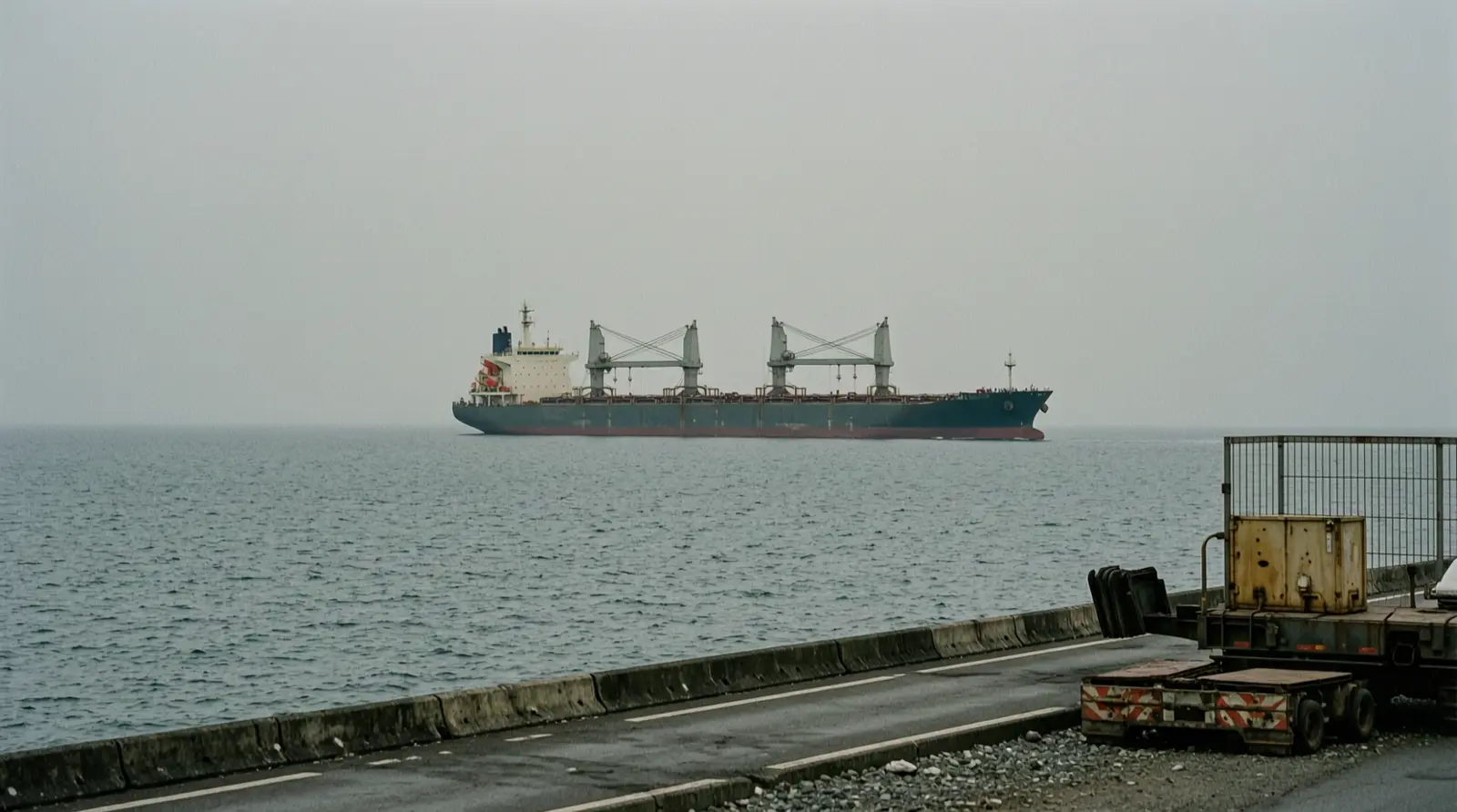
Houthi threats against Aramco facilities and Saudi airports coincide with reports of empty supertankers turning away from the Persian Gulf amid Iranian attack threats. Japan is responding with ship-to-ship purchases and compensation for oil importers' high shipping costs. With Brent near $105, the market is pricing both infrastructure risk and the cost of moving crude.
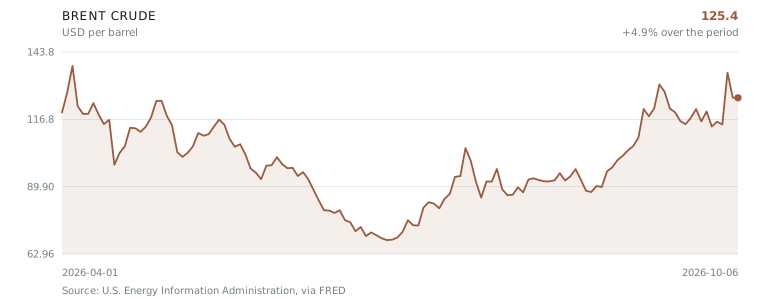
Two pressure points are moving Saudi oil risk at once: Houthi threats against Aramco facilities and Saudi airports, and empty supertankers turning away from the Persian Gulf as Iranian attacks threaten a critical oil transfer hub. Brent is hovering near $105 per barrel, which turns any delay in loading, routing or shipping costs into an immediate commercial question.
The reports do not describe one uninterrupted escalation. They describe two separate risk lanes: one over Saudi territory, the other over Gulf maritime access. For a physical market, that distinction matters because each lane hits a different part of the barrel's journey.
Threats on land, hesitation at sea
The Houthis have threatened Saudi Arabia's Aramco facilities and Saudi airports. Explosions were reported in Sanaa shortly after the Saudi-led coalition issued an evacuation order. Those facts point to a familiar pattern: threats against Saudi infrastructure, followed by signals of military action in Yemen.
The maritime report is different in character. Empty supertankers are turning away from the Persian Gulf as Iranian attacks threaten a critical oil transfer hub. An empty tanker is not avoiding a cargo already on board; it is declining to enter a loading area. If sustained, that is a stronger signal than a ship diverting with cargo, because it affects the next lifting before the cargo even exists.
That matters for Saudi crude because the kingdom's exports depend not only on production but on the chain that moves crude from loading points to buyers. A threat to a facility can reduce output; hesitation at sea can delay liftings even if production continues.
An empty tanker is not avoiding a cargo already on board; it is declining to enter a loading area.
The two theaters can interact, but they do not automatically merge. Houthi threats to Saudi oil infrastructure and Gulf shipping raise the possibility of wider disruption, while the supertanker signal points to a specific commercial hesitation near a transfer hub. Traders need to know whether the same vessels and loading points are affected, or whether these are separate decisions responding to different hazards.
Japan's workaround shows the freight channel
Japan's response shows how quickly buyers adapt when shipping becomes expensive or uncertain. Japanese refiners are buying Middle East crude through ship-to-ship transfers. That method can keep cargoes moving when direct port calls or standard routes become less attractive, but it adds operations, time and counterparty complexity.
Ship-to-ship transfers move oil from one vessel to another. That can keep cargoes moving without a direct port call, but it adds complexity.
Japan has also moved to cushion the cost. The country approved three bills that include compensation for oil importers' high shipping costs. That is a fiscal signal: Tokyo sees freight as a threat to supply security, not merely a market nuisance. For refiners, support may reduce the immediate pain of higher transport costs; for the oil market, it confirms that the cost of moving barrels has become politically visible.
The link to crude prices is indirect but important. Brent near $105 per barrel already reflects a tight risk backdrop. If ship-to-ship transfers, rerouting or elevated shipping costs persist, they can widen the gap between physical crude availability and the price needed to deliver it to a refinery gate.
What to watch without assuming one crisis
The strongest evidence will come from observable physical behaviour. Are more empty supertankers refusing Persian Gulf loadings, or is this a short pause by a few owners? Are Japanese refiners expanding ship-to-ship arrangements as a temporary workaround or a standing system? Are Saudi facilities and airports facing repeated threats, or isolated warnings?
The clearest confirmation would come from shipping costs and vessel behaviour, but the available details do not provide rates. Without those numbers, the safest reading is that risk is being reported, not yet quantified.
The market should also separate the actors. The Houthi threats concern Saudi targets and Yemen-related escalation, including explosions in Sanaa after an evacuation order. The supertanker report concerns Iranian attack threats around a Persian Gulf oil transfer hub. Both can raise Saudi oil risk, but they do so through different routes, different weapons and different timelines.
For now, the practical question is not whether every headline belongs to a single coordinated event. It is whether the physical system is losing flexibility. A barrel can survive a threat if ships still load and buyers can absorb higher freight. When empty vessels turn away and importers seek compensation for shipping costs, the market is being told that the cost of moving oil is rising.
- 01Houthis threatened Aramco facilities and Saudi airports.
- 02Explosions were reported in Sanaa after a Saudi-led coalition evacuation order.
- 03Empty supertankers are turning away from the Persian Gulf amid Iranian attack threats to an oil transfer hub.
- 04Japanese refiners are buying Middle East crude through ship-to-ship transfers.
- 05Japan approved three bills including compensation for oil importers' high shipping costs.
Interpretation, not reporting. The facts above carry their tiers; this is one correspondent’s reading of them.
The market is being asked to price two distinct risks, not one clean escalation. I would treat the Houthi threats to Aramco facilities and airports as political-military risk to Saudi infrastructure, while the empty supertankers turning away from the Persian Gulf are a commercial signal about loading risk. The second is more immediately useful: an empty vessel refusing to enter says something about the next cargo, not the last one. Japan's ship-to-ship purchases and compensation for high shipping costs show buyers are already paying to keep barrels moving. If Brent stays near $105, I expect freight and transfer operations to remain part of the crude story. What would change my view is evidence that the same ships or hubs are being hit by both threats at once. Until then, I would not turn these reports into a single supply-loss forecast; I would watch whether empty-tanker avoidance spreads beyond a few voyages.
— Tomás Ferreira
Every claim in this article, and what it rests on
We do not ask you to take our word for it. Each statement below carries its tier and its sources. Where sources disagree, you get both accounts and what would settle it.
The Houthis threatened Saudi Arabia's Aramco facilities.
The Houthis threatened Saudi airports.
Explosions were reported in Sanaa shortly after the Saudi-led coalition issued an evacuation order.
Houthi attacks threaten Saudi oil infrastructure and Gulf shipping.
Empty supertankers are turning away from the Persian Gulf as Iranian attacks threaten a critical oil transfer hub.
Japanese refiners are buying Middle East crude through ship-to-ship transfers.
Japan approved three bills that include compensation for oil importers' high shipping costs.
Brent crude hovered near $105 per barrel.
The case against this story
Written by an adversarial reviewer, not the correspondent
The story conflates two geographically and operationally distinct theaters. Claims about Houthis threatening Saudi Aramco facilities and airports describe a Yemen-based actor striking Saudi targets. But the claim about empty supertankers turning away from the Persian Gulf as 'Iranian attacks' threaten a critical oil transfer hub shifts to a different body of water, a different state actor, and a different set of targets. The Houthis operate in the Red Sea and Bab el-Mandeb Strait, not the Persian Gulf. This conflation makes a reader picture a single escalating crisis when the claims may describe loosely connected or entirely separate events. Furthermore, 'empty supertankers turning away from the Persian Gulf' is internally odd: empty tankers travel toward loading terminals to pick up cargo; if they are turning away empty, they are declining to load, which is a far stronger and more specific claim than generic threat-driven rerouting. The causal chain from Houthi threats to Japanese ship-to-ship transfers to Japanese legislation to a specific Brent price is presented as connected, but each link could be explained by broader market conditions, insurance rate changes, or unrelated geopolitical tensions rather than the specific incidents described.
Who benefits from this framing: Oil traders and commodity speculators benefit from threat inflation that supports higher crude prices. Governments seeking authorization for naval deployments or military action benefit from an escalating, multi-front crisis narrative. Saudi Arabia benefits from framing Iran as directly attacking Persian Gulf shipping rather than limiting discussion to Houthi activity from Yemen. Japanese oil importers benefit if legislation compensating their shipping costs is justified by an inflated threat picture. Defense contractors benefit from narratives that justify increased military presence across both the Red Sea and the Persian Gulf.
Report an error in this article
Subscriptions open at launch
Global Materials Review will be a paid publication. Reading is free while we build the archive — leave an address and we will write to you once, when subscriptions open.