
Houthi strikes and an IMF warning test Gulf oil risk
A wide Brent-WTI gap and an IMF warning show how quickly Gulf strikes can turn into global energy risk.
 Tomás FerreiraEnergy, shipping and chokepoints
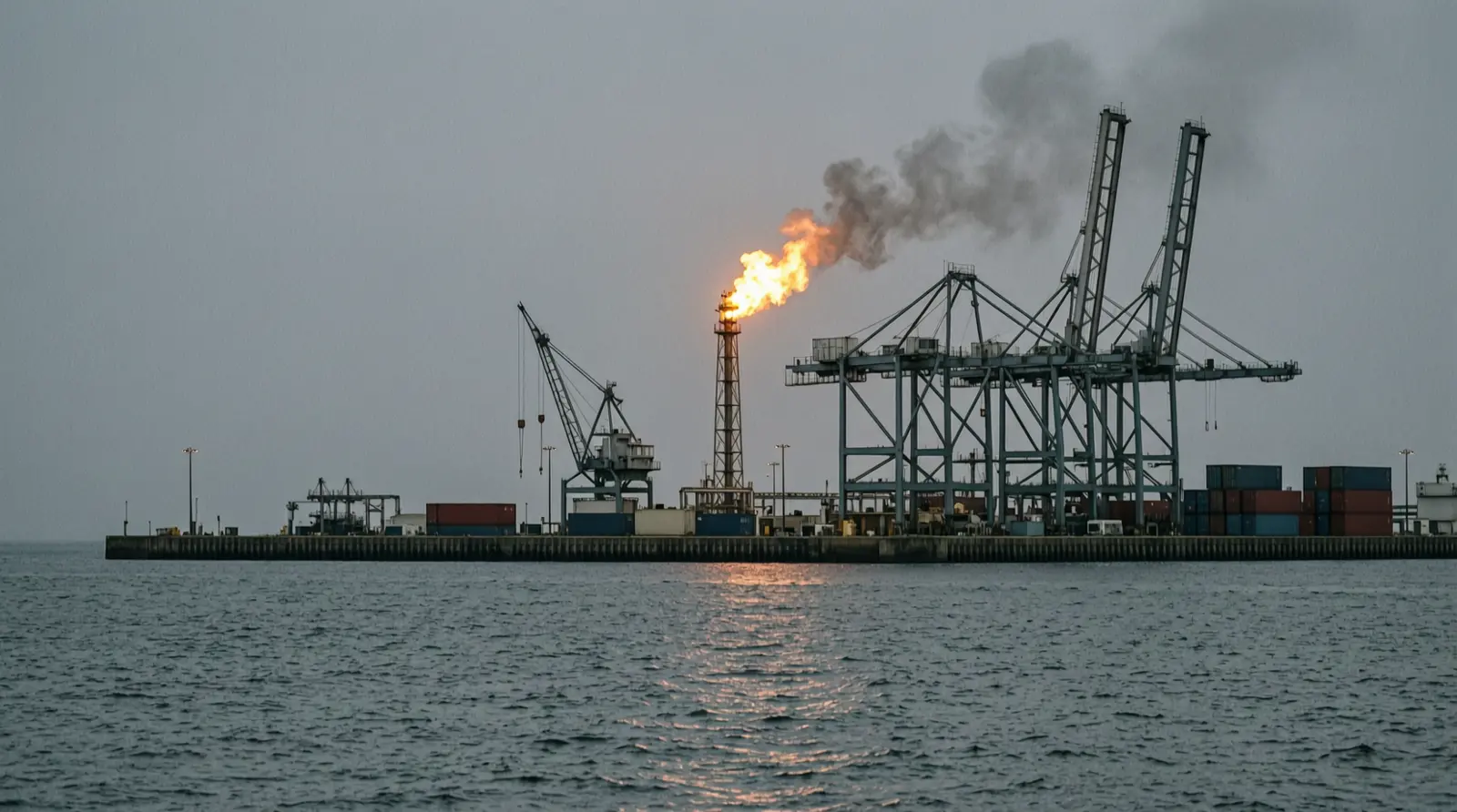
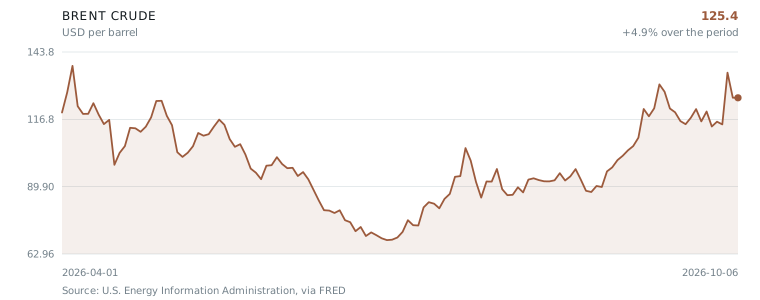
Brent traded at $125.44 on 6 October while WTI stood at $96.24, a wide split that points to basin-specific risk rather than a single oil shock. The IMF's managing director warned that Houthi strikes on Saudi infrastructure could affect the global economy, but the link between attacks and prices remains unproven. The prospect of Israeli help for Saudi Arabia is still hypothetical, with political barriers unresolved.
On 6 October, Brent crude was priced at $125.44 and West Texas Intermediate at $96.24. That is a $29.20 gap between the two reference grades, and it matters because the two numbers are not describing the same barrel. Brent is the seaborne benchmark that carries Gulf risk; WTI is the US interior marker. When the spread widens like this, the market is not simply saying “oil is dear.” It is saying that some barrels, routes and basins are more exposed than others.
The IMF's managing director warned that strikes on Saudi infrastructure by Yemeni Houthis could affect the global economy. The warning was issued against a backdrop described as escalating attacks on Saudi Arabia, and the strikes are being characterized as unprecedented. Those words are heavy. But what is established is a warning and a characterization, not a direct line from a specific strike to the day's prices.
Prices carry two different stories
Brent at $125.44 is the number that matters for a Gulf disruption. It prices the marginal seaborne crude that refiners in Europe, Asia and the Atlantic basin compete for. If Saudi infrastructure is hit, the first-order question is not whether Saudi production stops entirely. It is whether loading schedules, pipeline flows, insurance premia and charterers' willingness to call at Gulf ports change.
WTI at $96.24 tells a different story. It is a US benchmark, less exposed to Gulf shipping risk and more influenced by American production, inventories and pipeline capacity. The $29.20 spread is therefore not a footnote. It is the market separating a global risk premium from a domestic supply picture.
The $29.20 spread is therefore not a footnote.
That separation should temper any simple reading of the oil tape. A move in Brent can signal war risk, tanker insurance, or a long detour around a chokepoint. A lower WTI does not confirm that the physical damage is small; it may simply say that the US market is insulated from the first shock. For a procurement desk, the relevant number is the one attached to the cargo it must actually lift.
The IMF warning is real, but the link is thin
The IMF warning is the clearest macro signal in this set. A managing director does not usually put Gulf infrastructure into global growth language unless the risk is being treated as more than local. The channel is straightforward: if Saudi flows are threatened, crude and product prices rise, freight and insurance costs follow, and energy-importing countries feel the hit through import bills, inflation and slower demand.
Still, the evidence stops short of showing that the attacks alone produced the quoted prices. Oil can move for reasons unrelated to a single theatre, and the IMF language is about possibility, not attribution.
The word “unprecedented” also needs handling. It is a characterization, not a measured quantity. For traders, the useful question is not whether the label is true but whether the attacks change the probability distribution: more sorties, deeper targets, better evasion, or a wider set of assets at risk. If the answer is yes, the risk premium can persist even without a confirmed loss of barrels. If the answer is no, the premium may be mostly fear.
Israel is a hypothesis, not a fleet
The most speculative thread is the idea that Israel could help Saudi Arabia against Houthi attacks. Political barriers remain, and the available language describes a possibility rather than a policy. No agreement, joint cell, deployment or public commitment is needed for markets to talk about it, but talk is not capability.
If Israeli assistance became real, the military calculus could shift in two ways. Better integrated air defence and intelligence could reduce the chance that a strike succeeds, which would lower the probability of a sudden supply outage. But open cooperation could also widen the conflict, bringing more actors into the targeting calculus and raising the risk that shipping, ports or energy assets are treated as legitimate targets by more parties.
For energy markets, the near-term variable is not whether such cooperation is desirable. It is whether it changes the expected frequency and success rate of attacks. Freight desks will watch tanker rates and war-risk premia long before ministries confirm anything. Insurers will price the route; politicians will phrase it later.
The open question is whether the next escalation shows up in physical flows or only in language. If Brent stays high while WTI lags, the market is still treating this as a Gulf shipping and infrastructure problem. If the spread narrows, the fear may be becoming general. If attacks continue without a visible change in Saudi loadings, the premium will rest on expectation rather than loss. That is the fragile part.
- 01Brent crude was $125.44 on 6 October.
- 02West Texas Intermediate was $96.24 on the same day.
- 03The IMF managing director warned Houthi strikes on Saudi infrastructure could affect the global economy.
- 04The attacks were described as escalating and characterized as unprecedented.
- 05Possible Israeli help for Saudi Arabia remains hypothetical, with political barriers.
Interpretation, not reporting. The facts above carry their tiers; this is one correspondent’s reading of them.
The oil market is not pricing a single shock; it is pricing geography. Brent at $125.44 and WTI at $96.24 separate the Gulf risk from the American supply picture, and that spread is the more honest signal. I would treat the IMF warning as a statement of transmission channels, not proof that the attacks set the price. The Israeli angle is even thinner: a hypothetical capability constrained by political barriers, not a deployed shield. What would change my reading is evidence that the attacks are altering flows, not just words. Without that, the story is mainly language and optionality. If attacks escalate while the spread remains wide, the market may keep paying for risk that has not yet become lost barrels. If Saudi flows actually falter, the spread will not be the interesting number anymore; the level of Brent will be.
— Tomás Ferreira
Every claim in this article, and what it rests on
We do not ask you to take our word for it. Each statement below carries its tier and its sources. Where sources disagree, you get both accounts and what would settle it.
Brent crude was priced at $125.44 on 2026-10-06.
West Texas Intermediate crude was priced at $96.24 on 2026-10-06.
The managing director of the International Monetary Fund warned that strikes on Saudi infrastructure by Yemeni Houthis could affect the global economy.
The IMF warning was issued as attacks on Saudi Arabia escalated.
Houthi attacks on Saudi Arabia are characterized as unprecedented.
Israel could help Saudi Arabia against Houthi attacks.
Political barriers remain to Israeli assistance for Saudi Arabia against Houthi attacks.
The case against this story
Written by an adversarial reviewer, not the correspondent
The story weaves together Houthi attacks on Saudi infrastructure, an IMF warning about global economic impact, speculative Israeli-Saudi security cooperation, and specific oil prices into a narrative of escalating regional crisis. But several threads are fragile. Calling the Houthi attacks 'unprecedented' ignores the September 2019 Aramco Abqaiq-Khurais attacks that temporarily disrupted roughly half of Saudi oil production — a prior and arguably more severe precedent that undermines the 'unprecedented' framing. The IMF managing director's warning may be a general observation about oil market volatility rather than a specific warning about Houthi strikes, and the story does not establish a direct causal link between the attacks and the cited oil prices. The Israel-Saudi angle is entirely speculative — 'Israel could help' and 'political barriers remain' describe a hypothetical scenario, not a reported development, with no evidence that either government has discussed or contemplated such cooperation. The unusually wide $29 spread between the two cited crude prices raises accuracy concerns about at least one figure. The overall framing appears designed to build alarm and support for Israel-Saudi normalization rather than report verified developments.
Who benefits from this framing: Israeli government and pro-normalization advocates who want to build public acceptance for Israel-Saudi security cooperation by framing it as a natural response to shared threats. Oil market speculators and commodities traders who profit from fear-driven price volatility and uncertainty. Defense contractors who would benefit from new military cooperation frameworks in the Gulf region. The Saudi government, which gains international sympathy and potential military support by portraying itself as under unprecedented attack. Hardline US foreign policy voices who advocate for a formal security alliance linking Israel and Gulf states against Iran.
Report an error in this article
Subscriptions open at launch
Global Materials Review will be a paid publication. Reading is free while we build the archive — leave an address and we will write to you once, when subscriptions open.