
Hormuz threats meet sinking hulls and a $125 Brent print
A closed-strait claim, two sinkings and spiking tanker rates force physical markets to weigh real disruption risk.
 Tomás FerreiraEnergy, shipping and chokepoints
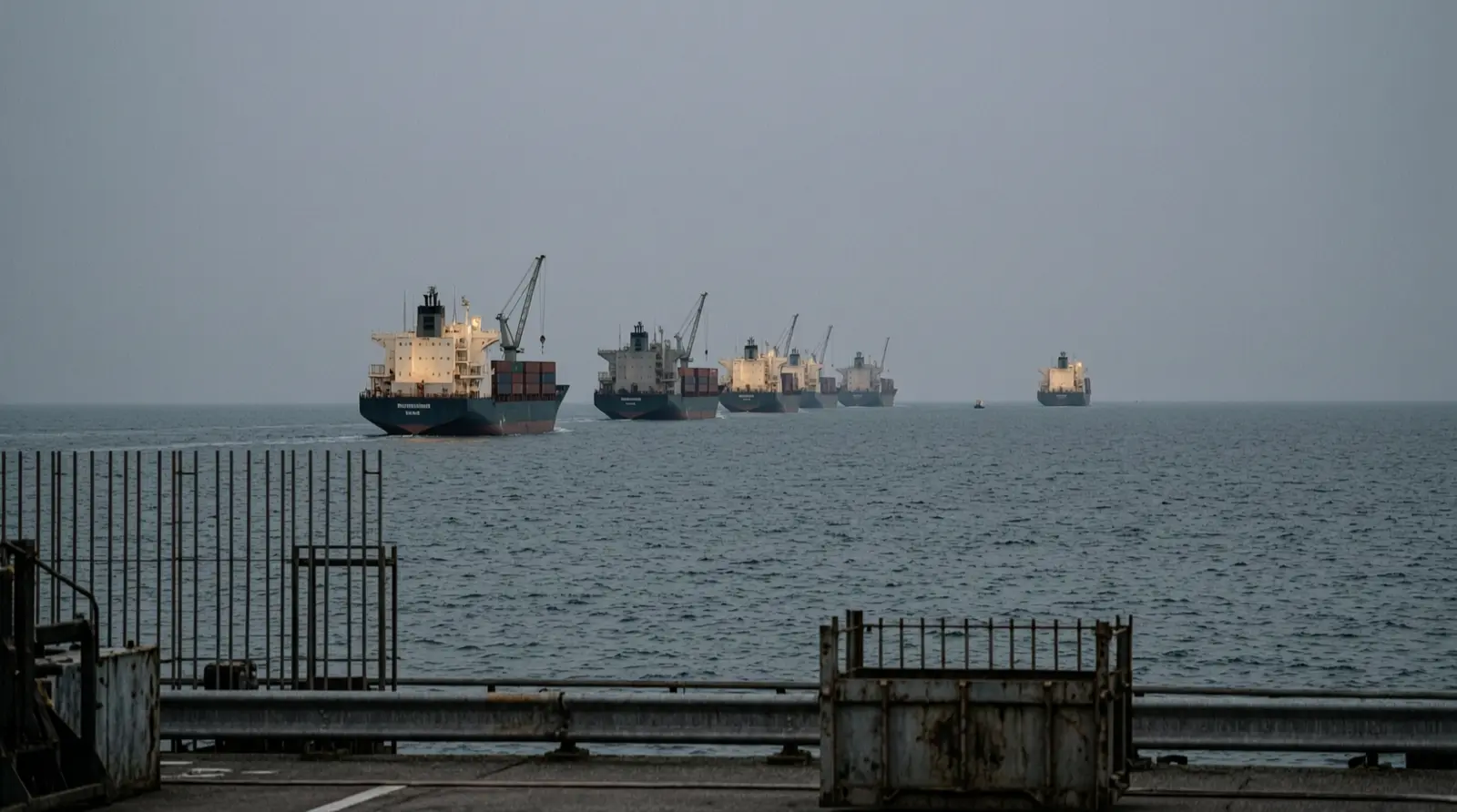
Brent traded at 125.44 on 6 October as reports said two commercial vessels sank in the Strait of Hormuz within 24 hours. Iranian statements described the waterway as closed or prohibited, while tanker-rate reports pointed to a sudden repricing of freight risk. The missing piece is causation: whether the sinkings, fire and market moves are one event or several.
Two commercial vessels sank in the Strait of Hormuz within a 24-hour period, according to reports, and Brent crude printed 125.44 on 6 October. That is the physical arithmetic now facing anyone who must move Gulf barrels: a narrow waterway, missing hulls and a price level that makes every extra day of transit expensive.
The same day, WTI stood at 96.24 and Henry Hub natural gas at 3.03. The crude numbers are the loud signal. The gap between Brent and WTI was almost $30, a spread wide enough to show pressure on seaborne barrels rather than a uniform move across all energy markets.
Words are not a blockade
A senior Iranian commander said the Strait of Hormuz is closed and any passage requires coordination with Iran. Iran's army also said a fire broke out on an oil tanker that tried to enter a prohibited area east of the strait. An Azerbaijani-language report went further, saying Iran struck an oil tanker near Hormuz.
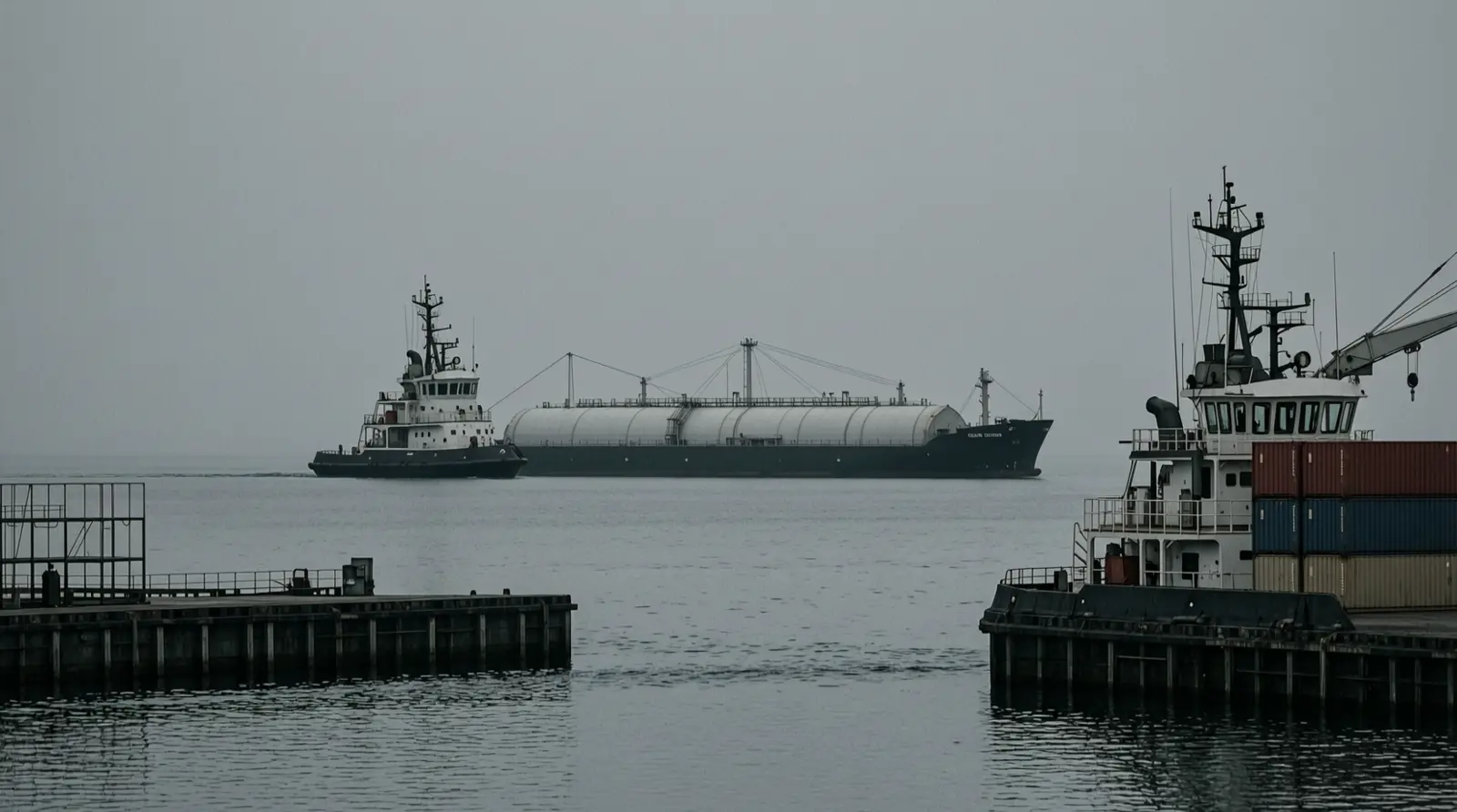
Those are three different levels of certainty. A commander's statement is political pressure. An army account of a fire is a version of events from the side controlling the coastline. A single foreign-language report of a strike is thinner still. None of them establishes, by itself, that the sinkings were an attack or that the waterway has been physically closed.
Words do not close a strait; freight rates, hulls and transit times do.
Words do not close a strait; freight rates, hulls and transit times do. So far, the reports show a threat, a fire and two sinkings, but they do not establish a common cause. Accidents, mechanical failure and weather can sink vessels in busy waterways. The market still has to decide whether these events are separate or connected.
Freight is doing the talking
The more immediate signal is money. Reports say oil shipping costs and tanker rates have spiked. That matters because freight is where risk becomes payable. The price move and the freight move are happening before any confirmed cause has been established.
A spike in tanker rates can move faster than diplomacy or military statements. It can also reverse quickly if the danger proves temporary. That is why the rate move deserves more attention than the rhetoric: it shows someone is paying to avoid or outrun the risk.
A separate report says ship-to-ship oil transfers are surging off India's west coast. If traders are already reorganizing cargoes away from direct Gulf loading patterns, that would be a practical response to friction. It is not proof of a blockade, but it is the kind of behavior that appears when routes become harder to plan.
Washington enters the calculus
The political clock matters too. Trump has ruled out attacks before the US midterm elections. That does not remove the possibility of a later response, but it puts a near-term constraint on the military side of the equation.
For physical markets, the question is not whether Tehran can make a loud assertion. It is whether the assertion changes the behavior of ships and charterers. Two sinkings inside one day are enough to make every master, owner and cargo desk ask whether the next transit is worth the risk.
The open question is simple: will the freight spike deepen into sustained rerouting, or will the sinkings and fire turn out to be unrelated incidents? The answer will show up in rates, transit reports and the next confirmed movement of hulls, not in the next statement.
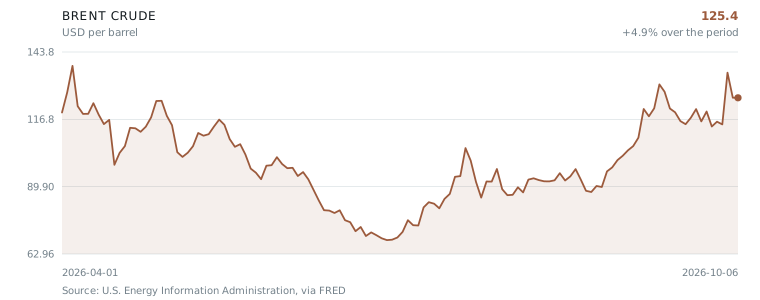
- 01Brent was 125.44 on 6 October, WTI was 96.24 and Henry Hub was 3.03.
- 02Reports said two commercial vessels sank in the Strait of Hormuz within 24 hours.
- 03A senior Iranian commander said the strait is closed and passage requires coordination with Iran.
- 04Reports said oil shipping costs and tanker rates spiked.
- 05Ship-to-ship oil transfers were reported surging off India's west coast.
Interpretation, not reporting. The facts above carry their tiers; this is one correspondent’s reading of them.
The market is not pricing a speech; it is pricing the chance that a speech becomes a route change. I would separate the noise from the signal in three places: freight, hulls and time. The commander's words are old-style pressure, but two sinkings inside 24 hours and reports of higher tanker rates are physical facts that can change the cost of moving a barrel before any government confirms an attack. The fire report and the Azerbaijani-language strike account are too thin to carry the story alone. If Brent stays near 125.44 while tanker rates stay high, the market is telling us the risk premium is real. If the sinkings later prove accidental and freight cools, the closure language will look like another threat. The key is whether ship-to-ship activity off India's west coast becomes a persistent workaround. Trump's refusal to authorize attacks before the US midterm elections adds a short political window, not a safety guarantee. I am watching the next confirmed transit incident, not the next statement.
— Tomás Ferreira
Every claim in this article, and what it rests on
We do not ask you to take our word for it. Each statement below carries its tier and its sources. Where sources disagree, you get both accounts and what would settle it.
On 2026-10-06, Brent crude was 125.44, WTI was 96.24, and Henry Hub natural gas was 3.03.
Two commercial vessels sank in the Strait of Hormuz within a 24-hour period.
Oil shipping costs and tanker rates have spiked.
A senior Iranian commander said the Strait of Hormuz is closed and any passage requires coordination with Iran.
Iran's army said a fire broke out on an oil tanker that tried to enter a prohibited area east of the Strait of Hormuz.
An Azerbaijani-language report said Iran struck an oil tanker near Hormuz.
Ship-to-ship oil transfers are surging off India's west coast.
Trump has ruled out attacks before the US midterm elections.
The case against this story
Written by an adversarial reviewer, not the correspondent
The story chains together weakly sourced and potentially unrelated events into a single narrative of Iranian escalation. A commander saying the Strait is closed is a statement, not an action—Iran has issued such threats repeatedly without closing the waterway. Two vessels sinking could be coincidental accidents, mechanical failures, or weather-related; the claim establishes no cause and no link to Iran. The tanker-fire report comes from Iran's own army, which has every incentive to frame the incident favorably by calling the area 'prohibited.' An Azerbaijani-language report of a strike is the weakest link in the chain yet borrows credibility from the surrounding claims. The oil-price and shipping-rate data, if drawn from unverified feeds, may be inaccurate or may reflect factors entirely unrelated to Hormuz—OPEC cuts, global demand shifts, supply disruptions elsewhere, or speculative trading. The narrative conflates a threat, possible accidents, a self-serving military account, a single foreign-language report, and market movements into one coherent story of Iranian aggression that the underlying evidence may not support.
Who benefits from this framing: Oil-exporting states and producers benefit from higher prices accepted as the new normal. Iran itself benefits from the perception that it controls the Strait and can close it at will, enhancing its geopolitical leverage whether or not it acts. Military hawks in the US and Israel benefit from a narrative of Iranian aggression that builds support for strikes or escalation. Shipping companies benefit from higher tanker rates justified by a risk premium. Oil-market speculators benefit from fear-driven volatility. Defense contractors benefit from a case for naval buildup and military readiness. Each of these actors has an interest in a reader accepting the framing that Iran is actively disrupting Hormuz and that elevated prices and rates are a justified response to real, confirmed danger.
Report an error in this article
Subscriptions open at launch
Global Materials Review will be a paid publication. Reading is free while we build the archive — leave an address and we will write to you once, when subscriptions open.