
Hormuz tanker fire and reported attacks squeeze oil and LNG flows
A tanker fire near the Strait of Hormuz and a series of reported attacks are turning transit risk into slower shipments and higher energy exposure.
 Tomás FerreiraEnergy, shipping and chokepoints
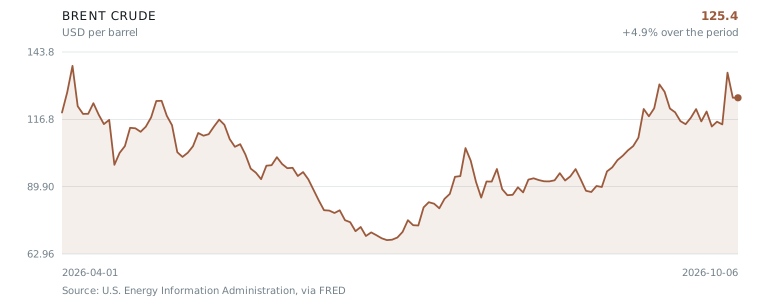
On 6 October, Brent was $125.44 and WTI was $96.24, a wide spread that points to route-specific risk. Iranian authorities reported a tanker fire in or near the Strait of Hormuz, while the Revolutionary Guards released footage of a ship they said they had hit. Reports of slower tanker traffic and severely disrupted Qatari and UAE LNG flows raise the risk that physical deliveries, not just prices, are affected.
On 6 October, Brent crude was $125.44 and West Texas Intermediate was $96.24. The gap between the two benchmarks is $29.20. That kind of spread matters because Brent is tied to seaborne crude, while WTI is not equally exposed to a Gulf shipping disruption. The gap separates seaborne barrels from barrels less exposed to the route.
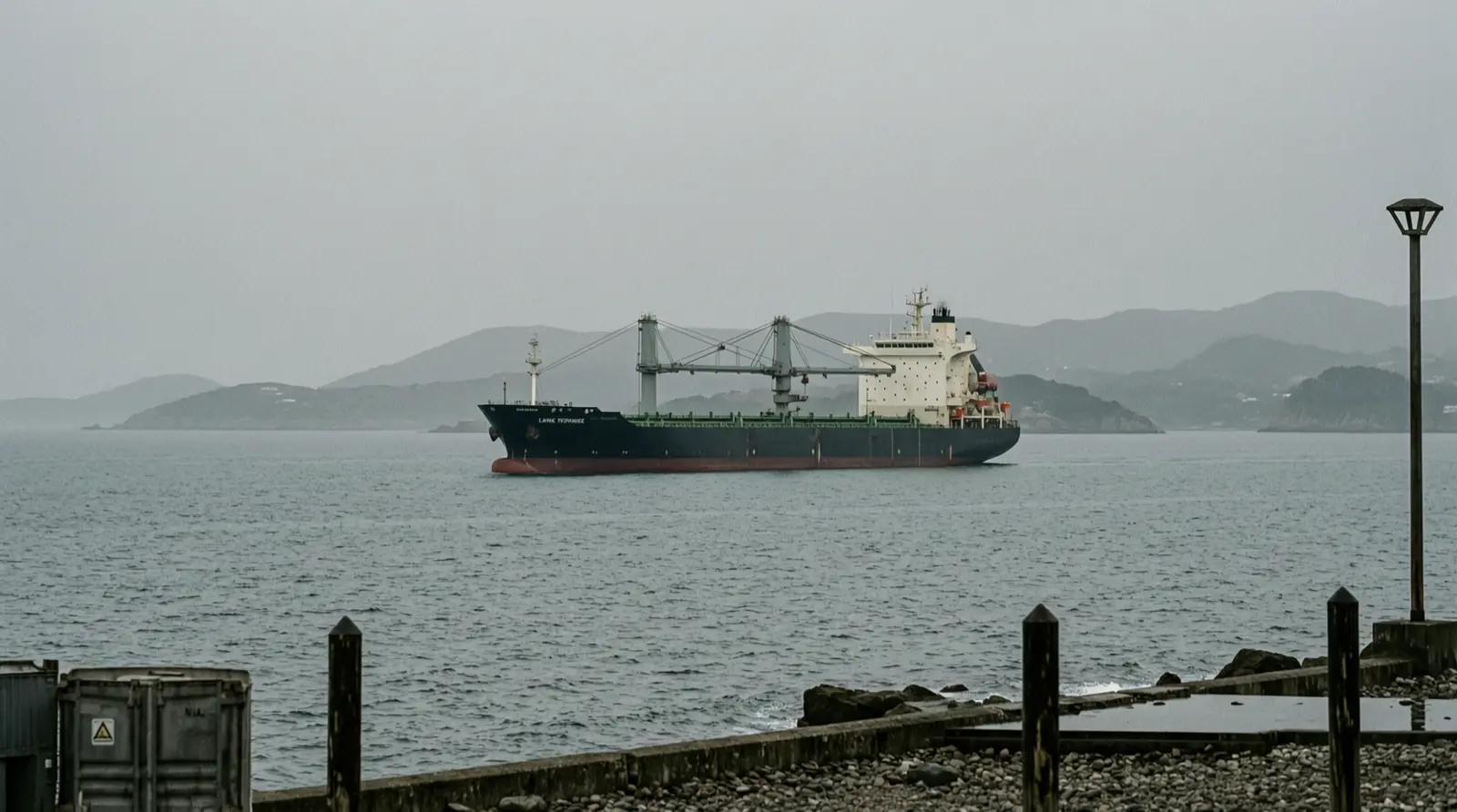
Iranian authorities reported an oil tanker fire in or near the Strait of Hormuz. The account is not settled: the location is hedged as "in or near" the strait, and independent confirmation is lacking. Iran's Revolutionary Guards published footage of a ship they said they had hit. The footage comes from the alleged attacker, not from an independent survey, and it does not by itself establish the vessel's condition, cargo or ownership.
A separate figure describes 24 Iranian attacks on commercial ships as reported, without identifying who reported them or what qualifies as an attack. That weakness matters. A single official statement, a self-released video and an unspecified attack count can still move markets, but they do not amount to a verified casualty list.
The physical channel is the Strait itself. Hormuz is a narrow route for crude and LNG carriers. If transit is treated as more dangerous, the response is usually not a full stop. It is slower sailing, longer waits, higher risk charges and more caution around loading windows. Each of those changes adds days and cost to a cargo.
A delayed tanker does not remove oil from the world forever, but it can break a delivery chain.
Slower transits turn risk into cost
Tanker traffic through the Strait of Hormuz has slowed amid reported Iranian ship attacks. Fewer vessels moving per day means fewer timely cargoes, even if production has not changed. A delayed tanker does not remove oil from the world forever, but it can break a delivery chain. Refineries and power generators run on schedules, not averages.
The LNG exposure is more constrained. The reported account describes Qatari and UAE LNG flows from the Strait of Hormuz as severely disrupted. Qatar's export route depends on passing through the bottleneck, so a delay there is not easily offset by another loading port. The molecules either move, or they do not.
Pakistan is the clearest near-term pressure point. The same account says Pakistan faces potential winter natural gas shortages if LNG flows through Hormuz remain disrupted. That is a physical timing problem. A buyer can pay more for a cargo, but only if the cargo arrives before peak demand.
Gas prices are telling a supply story, but not a simple one
Europe's benchmark natural gas prices remain close to their highest levels since late 2022, with limited Qatari LNG supply cited as a factor. The link is plausible because the supply cited is Qatari LNG, and any reduction in available cargoes tightens the market. But European gas prices do not move on one variable alone. Other supply and demand factors can also matter.
The oil signal is clearer because the spread is visible. Brent at $125.44 against WTI at $96.24 separates seaborne barrels from less exposed ones. If Hormuz risk persists, the spread becomes a gauge of how much extra buyers will pay for deliverable barrels outside the Gulf. If the risk fades, the spread should narrow. If it does not, physical constraints are doing more work than headlines.
The open question is whether these reported incidents remain isolated or harden into a pattern that shipowners and charterers treat as normal. A fire can be an accident. A video can be self-serving. But slower transits, disrupted LNG flows and a wide crude spread are already measurable.
- 01Brent crude was $125.44 and WTI was $96.24 on 6 October.
- 02Iranian authorities reported a tanker fire in or near the Strait of Hormuz.
- 03Iran's Revolutionary Guards published footage of a ship they said they had hit.
- 04Tanker traffic through Hormuz has slowed amid reported Iranian ship attacks.
- 05Reports describe Qatari and UAE LNG flows as severely disrupted and flag potential Pakistani winter shortages.
Interpretation, not reporting. The facts above carry their tiers; this is one correspondent’s reading of them.
The market is not pricing a closed Strait of Hormuz; it is pricing doubt about every transit that passes through it. I would separate the hard numbers from the fog: Brent at $125.44 and WTI at $96.24 are concrete, and the wide spread between them tells me seaborne barrels are being treated as scarcer than less exposed ones. The tanker fire, the Guards' footage and the figure of 24 reported attacks are weaker as evidence, because they come from official, self-interested or unspecified sources. Still, weak evidence can produce strong logistics if the response is slower sailing, longer waits and more caution. The LNG side worries me more than the oil side, because Qatari and UAE cargoes cannot simply avoid the bottleneck, and Pakistan's winter demand has a hard calendar. I would watch whether the Brent-WTI spread stays wide and whether disrupted LNG flows persist into colder weeks. If traffic normalises, the risk premium should bleed out. If it does not, the market is telling us that Hormuz has moved from headline risk to operating cost.
— Tomás Ferreira
Every claim in this article, and what it rests on
We do not ask you to take our word for it. Each statement below carries its tier and its sources. Where sources disagree, you get both accounts and what would settle it.
Brent crude was $125.44 and WTI was $96.24 on 2026-10-06.
Iranian authorities reported an oil tanker fire in or near the Strait of Hormuz.
Iran's Revolutionary Guards published footage of a ship they said they hit.
Twenty-four Iranian attacks on commercial ships have been reported.
Tanker traffic through the Strait of Hormuz has slowed amid Iranian ship attacks.
Qatari and UAE LNG flows from the Strait of Hormuz remain severely disrupted.
Pakistan faces potential winter natural gas shortages if LNG flows through the Strait of Hormuz remain disrupted.
Europe's benchmark natural gas prices remain close to their highest levels since late 2022 as Qatari LNG supply remains limited.
The case against this story
Written by an adversarial reviewer, not the correspondent
The story constructs a dramatic narrative of Iranian aggression and energy crisis from a chain of weakly attributed claims. It opens with what 'Iranian authorities reported' about a tanker fire — but authorities reporting an event is not independent verification, and the location is hedged as 'in or near' the Strait. It then cites footage the Revolutionary Guards 'said' showed a ship they hit — a self-serving claim by the alleged attacker, not third-party confirmation. The assertion that twenty-four Iranian attacks have been 'reported' uses passive voice without identifying who did the reporting or what threshold defines an 'attack.' From these attributed and passive-voiced premises, the story leaps to 'severely disrupted' LNG flows, potential Pakistani winter shortages, and European gas prices near late-2022 highs — each link an inference, each causal claim (European prices rising 'as Qatari LNG supply remains limited') ignoring other drivers like Russian pipeline gas, storage levels, weather, and Norwegian supply. The specific oil prices ($125.44 Brent, $96.24 WTI) are presented at the highest confidence tier despite an unusually wide spread that would be extraordinary under normal market conditions. The entire narrative could be amplifying Iranian propaganda and market panic into a coherent-sounding but thinly-sourced crisis story.
Who benefits from this framing: US and Israeli interests seeking to frame Iran as a maritime aggressor to justify military action or sanctions; Gulf states opposing Iran that want expanded Western security guarantees; US LNG exporters who gain from perceived Gulf supply risk driving European and Asian buyers toward American cargoes; energy traders and speculators profiting from price volatility; European energy security hawks pushing for accelerated non-Gulf gas infrastructure; and naval defense contractors advocating for increased Western military presence in the Strait of Hormuz.
Report an error in this article
Subscriptions open at launch
Global Materials Review will be a paid publication. Reading is free while we build the archive — leave an address and we will write to you once, when subscriptions open.