
Hormuz freight squeeze turns crude discounts into a delivered-price problem
Freight, not the benchmark, is deciding whether a cargo reaches a refinery at a workable price.
 Tomás FerreiraEnergy, shipping and chokepoints
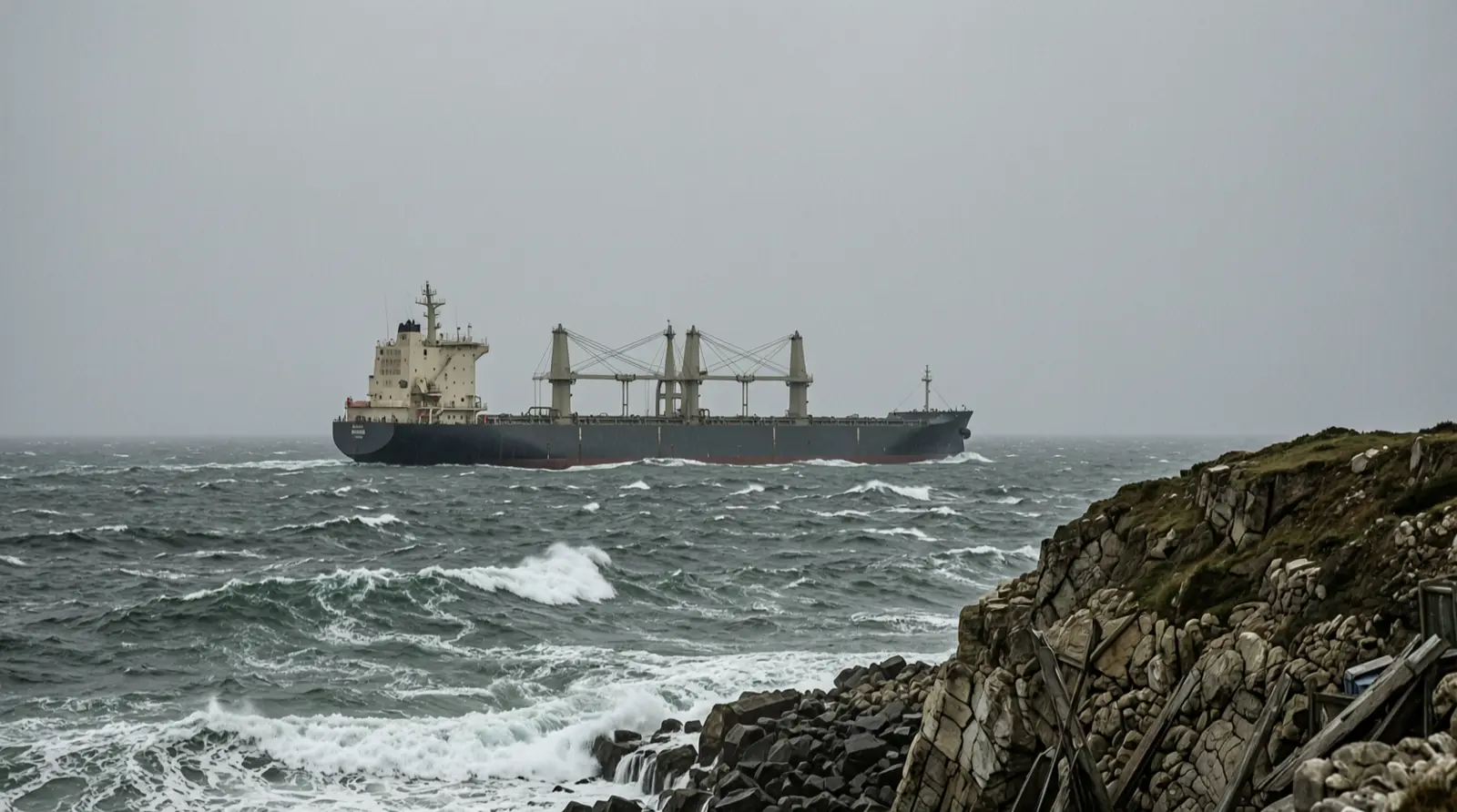
Brent and WTI were both elevated on 14 October, so the reported stress is not showing up as a benchmark collapse. Market participants say record freight and bunker costs are forcing producers to cut prices on exposed cargoes. The question is whether Hormuz-related shipping friction remains a regional cost problem or reshapes crude and product flows.
At 126.55 a barrel on 14 October, Brent is not signalling that refiners have stopped buying crude. WTI at 101.91 the same day tells the same broad story: benchmarks are elevated, not distressed. Brent traded 24.64 above WTI, a wide premium that points to a tight physical market rather than a demand collapse. The pressure being reported is narrower and more physical. It sits between the loading port and the refinery gate, where freight, fuel and insurance turn a barrel into a delivered cost.
The market narrative says record shipping costs are forcing oil producers to slash crude prices. Put more carefully, freight is changing the netback a producer can receive. If a voyage costs more, the seller either accepts a lower price at the loading point or asks the buyer to pay more on arrival. When delivered prices press against refinery margins, the adjustment usually appears first in discounts and differentials, not in a collapse of the benchmark.
That distinction matters. A producer cutting a grade to move a cargo is not the same as the world price falling. If buyers had truly walked away, the market would not have cleared at 126.55 and 101.91. Brent can remain high while specific cargoes trade weaker because the cost of moving them has risen. The market can clear at a high benchmark and still leave sellers struggling to place certain barrels.
Freight is the price now
The reported squeeze is centred on the Strait of Hormuz, where crude and gas flows are directly exposed. A disruption there does not need to stop traffic to matter. If it adds days, risk or fuel to a voyage, those costs land on the freight invoice.
Brent can remain high while specific cargoes trade weaker because the cost of moving them has risen.
For a Gulf cargo bound for Asia, the change is immediate. For a cargo heading to Europe, the calculus also includes alternatives: a longer route, a different supplier, or a delay. The question for a procurement desk is not whether oil exists, but whether it arrives at a price the refinery can run. If the answer is no, the bid drops and the producer must either absorb the freight bill or lose the sale.
This is where the phrase “beyond what refiners are willing to pay” needs care. Refiners do not refuse all crude at 126.55 Brent; they refuse marginal barrels at a particular delivered price. The market still clears because some buyers can run high-sulphur grades, use inventories, blend, or pass costs into products. The stress shows up in narrower margins and weaker discounts for exposed grades.
Bunker bills spread the risk
The second reported channel is fuel for ships itself. The story says the Hormuz crisis is turning shipping’s fuel bill into a supply crisis. If bunker fuel becomes scarce or expensive, the cost rises twice: first in the freight rate, then in the price of every cargo that must travel farther or wait longer.
That matters beyond tankers. The same narrative extends the disruption to container shipping, although the link there is less direct than for crude and gas. Containers do not need Hormuz in the same way a Gulf crude cargo does; they can be rerouted, delayed or shifted to other services. The cost of those detours, however, can still feed into fuel surcharges, schedule reliability and inventory planning.
The physical test will be visible before it appears in official statements. Watch for ships slowing to save fuel, longer port stays, higher spot freight for clean products, and refiners buying closer grades instead of distant ones. Those are the signs that freight is becoming the market’s marginal price-setter.
For now, the benchmarks say scarcity, not collapse. The reported discounts say logistics. The open question is whether the shipping squeeze remains a regional cost problem or widens into a sustained rerouting of crude and product flows.
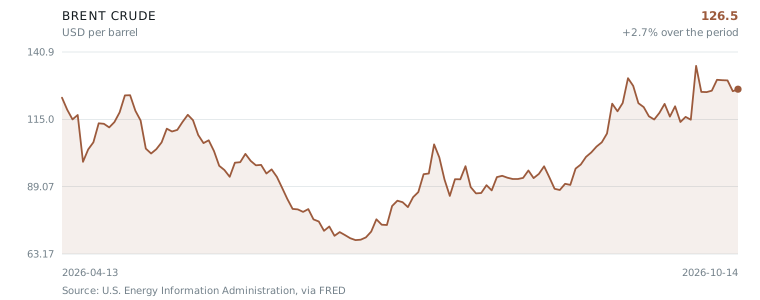
- 01Brent was 126.55 and WTI was 101.91 on 14 October.
- 02Brent traded 24.64 above WTI on the same day.
- 03Reports say record shipping costs are forcing producers to cut crude prices.
- 04The Hormuz crisis is reported to affect crude, gas, container shipping and bunker fuel.
Interpretation, not reporting. The facts above carry their tiers; this is one correspondent’s reading of them.
The freight squeeze is real; the price-collapse framing is not. Brent at 126.55 and WTI at 101.91 on 14 October show a market still clearing at high levels, not one where refiners have collectively walked away. What I think we are seeing is a delivered-cost problem. Producers may need to cut differentials on exposed cargoes because the voyage, not the crude, has become the marginal cost. That leaves benchmarks firm while individual barrels trade weaker.
The Hormuz link is strongest for crude and gas. Extending it to container shipping and bunker supply is plausible, but it needs more than inference. I would watch whether the fuel bill and routing costs keep rising. If ships slow, wait or detour, the cost will appear in fuel bills and schedules. If those signs stay absent, the story is too broad. My test is simple: high freight should compress producer netbacks and refinery margins before it breaks the benchmark.
— Tomás Ferreira
Every claim in this article, and what it rests on
We do not ask you to take our word for it. Each statement below carries its tier and its sources. Where sources disagree, you get both accounts and what would settle it.
Brent crude was priced at 126.55 on 14 October 2026.
WTI crude was priced at 101.91 on 14 October 2026.
Record shipping costs are forcing oil producers to slash crude prices.
Freight is reshaping global oil trade and the prices producers can command for crude.
Soaring shipping costs are pushing delivered crude prices beyond what refiners are willing to pay.
The Hormuz crisis is affecting crude oil and gas.
The Hormuz crisis is affecting container shipping.
The Hormuz crisis is turning shipping’s fuel bill into a supply crisis.
The case against this story
Written by an adversarial reviewer, not the correspondent
The story's own numbers contradict its narrative. Brent at 126.55 and WTI at 101.91 are high benchmark prices, not the picture of a market where producers are 'slashing' prices and delivered crude is 'beyond what refiners are willing to pay.' If refiners truly refused to pay, the market would not clear at these levels. The story appears to conflate regional crude discounts (producers cutting differentials to move specific cargoes) with absolute price collapse, and to inflate elevated shipping costs into a systemic supply crisis. The extension of a Hormuz disruption from oil and gas—where the link is direct—to container shipping and bunker-fuel supply chains relies on inference rather than demonstrated evidence. Multiple strong causal words ('record,' 'slash,' 'soaring,' 'beyond') compound the risk that the framing outruns the data.
Who benefits from this framing: Shipping companies and tanker owners who can justify higher freight rates on the back of a crisis narrative; oil traders and commodity speculators who profit from volatility and panic-driven positioning; parties advocating for military intervention or aggressive foreign-policy action in the Persian Gulf who benefit from amplifying the scale of disruption; domestic or landlocked crude producers who gain a competitive edge when seaborne imports are portrayed as impossibly expensive; and refiners who can use the 'unaffordable delivered crude' argument to justify wider margins on refined products.
Report an error in this article
Subscriptions open at launch
Global Materials Review will be a paid publication. Reading is free while we build the archive — leave an address and we will write to you once, when subscriptions open.