
Gulf data centres become targets as oil risk widens
Threats to cables, data hubs and Gulf export routes add a digital layer to the energy risk premium.
 Tomás FerreiraEnergy, shipping and chokepoints
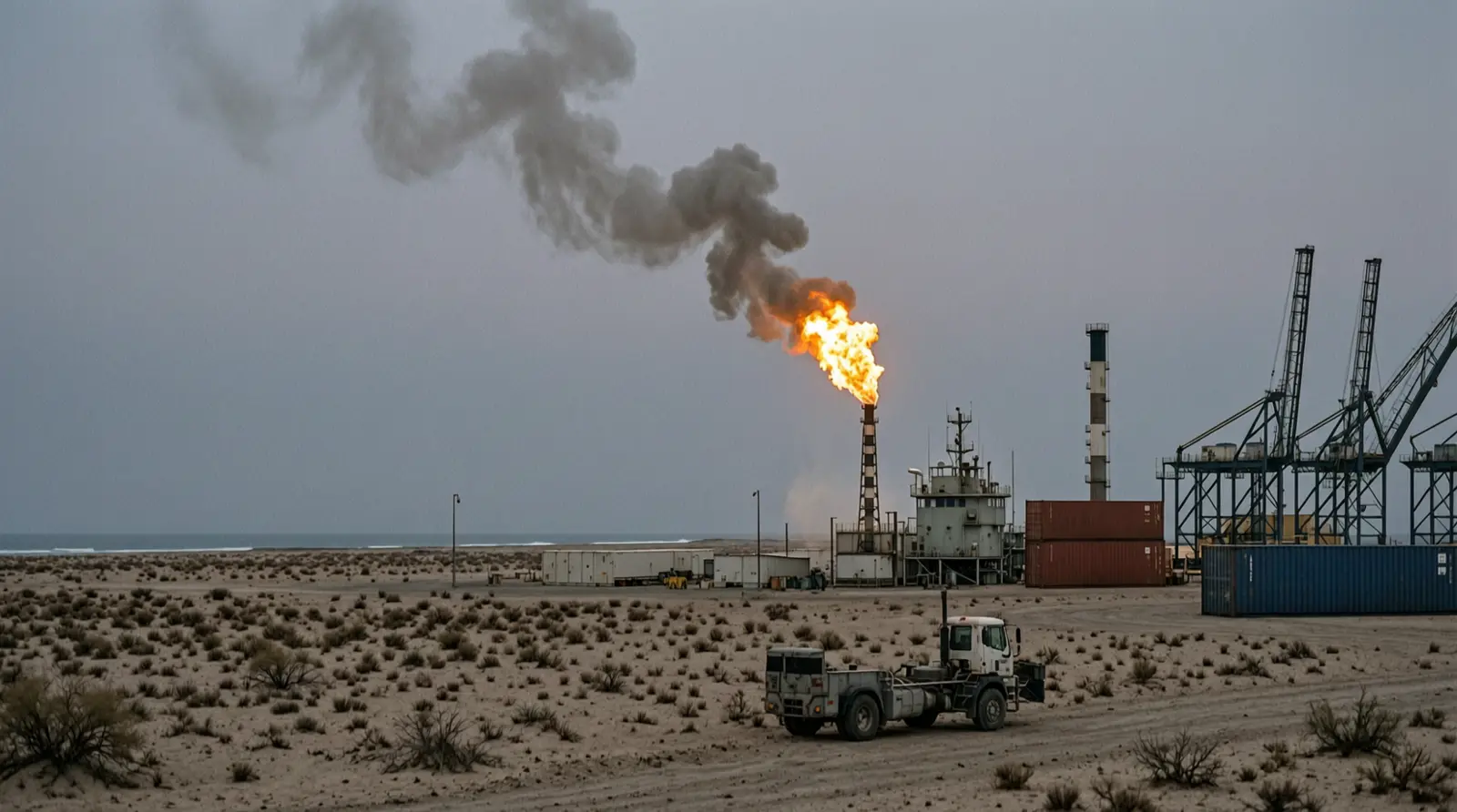
Brent crude was recorded at $125.44 on 6 October, while another account describes prices easing after topping $106 per barrel. Iran has warned that Gulf cables and data centres could be attacked, and reports say Houthi attacks remain a risk to Saudi energy markets. Saudi Arabia has pledged to keep oil exports flowing, but the threat set now includes digital chokepoints as well as physical supply.
Price signals are not agreeing
On 6 October, Brent crude was recorded at $125.44 per barrel. Another market account says crude prices eased after topping $106 per barrel. Those two levels cannot both describe the same contract at the same moment.
The gap may reflect a different benchmark, a different date or a delayed update. But the practical effect is the same: buyers and hedgers are being asked to manage risk while the price narrative is unsettled. For a procurement desk, the difference between a $106 correction and a $125 stress level changes budget buffers, freight hedges and the cost of replacing delayed cargoes.
A trader looking at a $125 Brent print and a $106 easing narrative cannot simply average them. One points to acute scarcity; the other to a pullback. The physical question is whether cargoes are being priced for disruption or for resilience. The spread is not a technicality; it is a signal that the market lacks a common reference.
Data hubs become part of the target set
Iran has warned that cables and data centres in the Gulf region could be attacked. Reports also say Houthi allies hold an internet chokepoint. If those threats harden, the exposure is not only a server room. It runs through the systems that schedule ships, confirm cargoes, route payments and track maintenance.
In commodity markets, time is freight, and freight is price.
A Gulf data centre is not just a building. It is a point where commercial information meets geography. If operators believe a cable or facility is within reach of a threat, they may duplicate systems, reroute communications or hold extra margin. Those are costs, even if no attack occurs.
A cable cut or a disabled facility does not need to stop a wellhead to raise the cost of moving a barrel. It can slow documentation, force manual checks, delay chartering or push operators onto longer, costlier routes. In commodity markets, time is freight, and freight is price.
A separate accusation that Iran was behind a plot against a UK airbase widens the perceived security perimeter. Even if the accusation is not proven, it adds another layer to how operators assess bases, ports and communications nodes across the region.
Saudi pledges meet Houthi attacks
Saudi Arabia has pledged to keep oil exports flowing. That assurance is aimed at buyers who need to know whether Gulf loadings will continue. But reports describe Houthi attacks on Saudi Arabia as a risk to energy markets, showing the export promise sits inside an active threat environment.
The pledge is a commitment to volume, not to route certainty. A cargo can be available and still be harder to lift if the commercial and security environment around it is unstable.
Reports also say Houthi shelling targeted residential areas and hospitals in Taiz. That broadens the conflict from infrastructure risk to civilian harm, and it complicates any simple reading of the market as merely reacting to supply headlines.
The available accounts are narrow. They record threats, attacks and assurances, not the full political or military context behind them. For a physical market, that omission matters: without context, it is harder to judge whether a threat is transient, bargaining leverage or a sustained campaign.
The open question is whether digital and energy infrastructure become priced together. If cables, data centres and export routes are treated as one connected exposure, the risk premium will no longer sit only in the crude price. It will appear in contract terms, routing choices and the cost of being wrong about which benchmark is real.
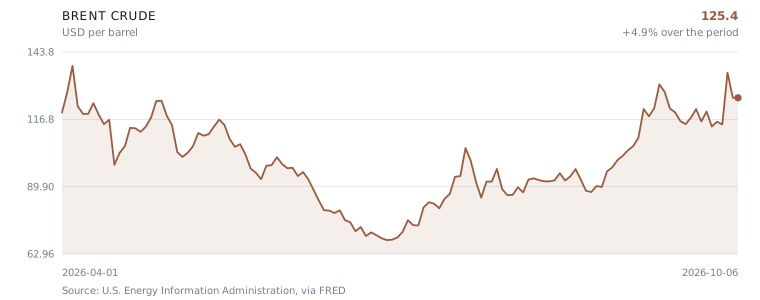
- 01Brent crude was recorded at $125.44 on 6 October.
- 02Iran warned that Gulf cables and data centres could be attacked.
- 03Reports say Houthi allies hold an internet chokepoint.
- 04Saudi Arabia pledged to keep oil exports flowing.
- 05Reports say Houthi shelling targeted residential areas and hospitals in Taiz.
Interpretation, not reporting. The facts above carry their tiers; this is one correspondent’s reading of them.
The market is being asked to price two different risks at once: a physical oil shock and a digital chokepoint. The second is the more important change. A high crude price can be hedged; a threat to cables and data centres touches the mechanism by which cargoes are tracked and moved. The conflicting price levels matter because they show how quickly a narrative can outrun its reference point. If Brent at $125.44 on 6 October is the operative level, the market is already paying for stress. If the easing-after-$106 account is the better guide, the premium is thinner and more reversible. I would watch whether Saudi Arabia's pledge to keep exports flowing holds against reports of Houthi attacks on Saudi energy markets, and whether Iran's warnings about cables and data centres remain words or become part of the risk calculus. The accusation involving a UK airbase and the reported shelling in Taiz make the picture wider, not narrower. What would change my mind is a period in which these threats do not alter the way market participants describe risk. Until then, I treat the infrastructure threat as an operating condition, not a headline.
— Tomás Ferreira
Every claim in this article, and what it rests on
We do not ask you to take our word for it. Each statement below carries its tier and its sources. Where sources disagree, you get both accounts and what would settle it.
Brent crude was recorded at $125.44 on 2026-10-06.
Iran warned that cables and data centres in the Gulf region could be attacked.
Houthi allies hold an internet chokepoint.
Saudi Arabia pledged to keep oil exports flowing.
Crude oil prices eased after topping $106 per barrel.
Houthi attacks on Saudi Arabia were reported as a risk to energy markets.
Iran was accused of being behind a plot against a UK airbase.
Houthi shelling targeted residential areas and hospitals in Taiz.
The case against this story
Written by an adversarial reviewer, not the correspondent
The story's overall picture is undermined by an internal inconsistency on oil prices: one claim says crude oil prices eased after topping $106 per barrel, while another records Brent crude at $125.44 on 6 October 2026. If these refer to the same benchmark, one figure is wrong; if different benchmarks, the story conflates them without clarification, misleading readers about the actual price level. Beyond this, the narrative is uniformly one-sided: Iran is portrayed as threatening cables, data centres, and UK military bases; Houthis are attacking Saudi energy infrastructure and shelling Taiz hospitals; while Saudi Arabia appears only as the responsible party pledging to keep oil flowing. This framing omits context about the Saudi-led coalition's own military campaign in Yemen, Saudi Arabia's role in Yemen's humanitarian crisis, and the broader geopolitical dynamics that might contextualise Houthi and Iranian actions. The result reads more like a case for Western and Gulf-state intervention than a balanced assessment.
Who benefits from this framing: Saudi Arabia and its Gulf allies benefit from being portrayed as the stabilising force keeping energy markets functioning while Iran and Houthis are framed as the sole aggressors. Oil traders and energy companies benefit from fear-driven price spikes and market anxiety, which can justify higher prices and profits. Western defence and security establishments benefit from Iran being depicted as a threat to critical infrastructure and allied military bases, supporting cases for increased military spending, sanctions, and interventionist policy.
Report an error in this article
Subscriptions open at launch
Global Materials Review will be a paid publication. Reading is free while we build the archive — leave an address and we will write to you once, when subscriptions open.