
Ebola and fighting test Congo's supply corridor
A reported Ebola surge and eastern-DRC clashes threaten labour, transport and stability in a key African mining route.
 Annika RautioMetals, mining and refining
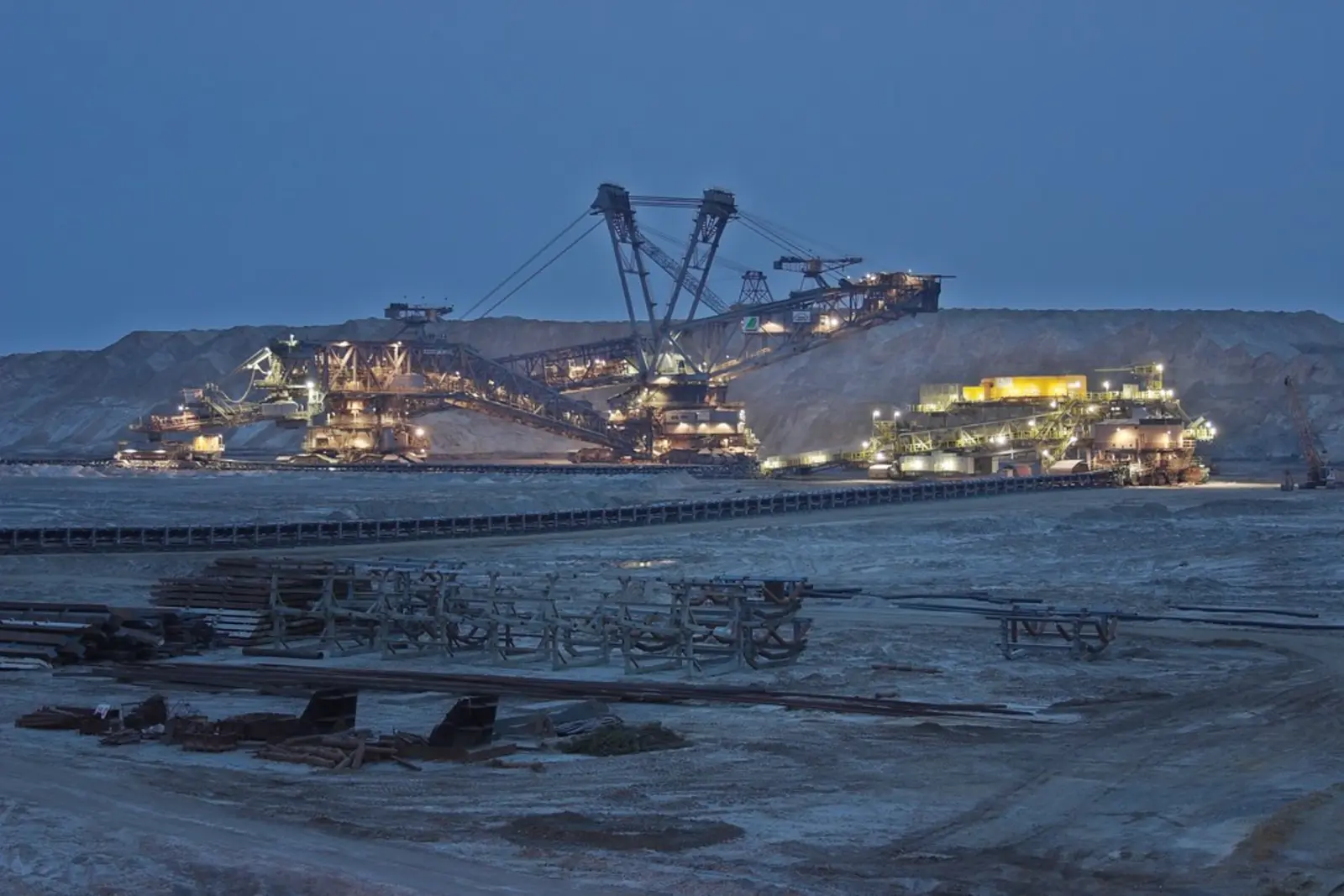
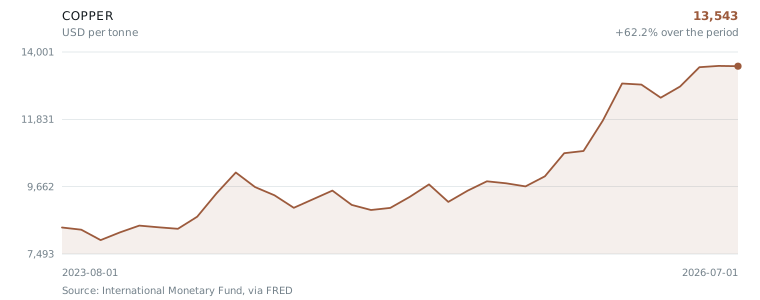
The Brent instrument value stood at 125.44 on 6 October, and the copper instrument value was 13542.820869565219 on 1 July. Reported fighting in eastern Democratic Republic of Congo and a reported Ebola surge threaten labour, logistics and political stability in a key mining corridor. The price values are direct figures, while the outbreak and security details are reported rather than confirmed.
Two shocks meet on one corridor
The Brent instrument value was 125.44 on 6 October. The copper instrument value was 13542.820869565219 on 1 July. Those are clean numbers; the ground behind them is not. Fighting is reported to be continuing in eastern Democratic Republic of Congo, and public-health accounts say Ebola cases in the country are surging. If both shocks are real, they hit the same system: labour, roads, border posts and political confidence in a key African mining and transport corridor.
The African Union is reported to have held talks in Kigali amid the fighting. That matters because diplomacy usually appears when the cost of inaction has already risen. For commodities, the first transmission is rarely a headline. It is a missed shift, a closed checkpoint, a truck queue that becomes a week.
The corridor is not just a line on a map. It is a sequence of permissions: a crossing guard, a weighbridge, a fuel depot, a labour camp. When fighting continues, each point can become a delay. When an outbreak is reported to be worsening, each delay becomes a possible quarantine. The two risks multiply because they use the same infrastructure.
Outbreak control is the bottleneck
Efforts to curb Ebola transmission in the Democratic Republic of Congo are reported to be faltering. The outbreak is described as the deadliest in the country's history, and the Bundibugyo strain is named in these accounts as the driver. Those details are difficult to confirm from the information available. But even an unconfirmed surge changes behaviour: clinics screen workers, families avoid markets, and ministries divert attention from roads and permits to isolation wards.
The two risks multiply because they use the same infrastructure.
For procurement heads and traders, the practical question is not whether the headline number is exact. It is whether sites can keep rotating staff, whether samples can move, and whether clinics remain open enough to certify workers. Even a contested outbreak can force companies to add medical checks, isolate symptomatic staff and hold spare parts longer than planned.
In a mining corridor, disease does not need to close a pit to matter. It thins the workforce, slows maintenance, and makes contractors reluctant to move crews. The effect arrives as lower utilisation and delayed shipments before anyone revises a national production figure.
Markets price risk before paperwork
The price inputs are easier to check than the outbreak statistics. The Brent instrument value at 125.44 on 6 October is a concrete marker for energy costs, which can feed haulage and logistics. The copper instrument value at 13542.820869565219 on 1 July is less familiar in format, but it still anchors the conversation in the metal most exposed to Congolese disruption.
Energy matters too. Brent is not a Congolese price, but diesel costs feed haulage. A high crude marker makes every extra kilometre and idle hour more expensive. Copper's quoted value, with its unusually long decimal trail, is a reminder that instrument data can look precise while the physical story behind it remains uncertain.
The mechanism from central Africa to a traded contract runs through physical constraints. A road closure raises trucking days. A sick workforce lowers throughput. A political crisis raises insurance and financing costs. None of these needs to stop production outright to tighten supply. They only need to make delivery less predictable.
The open question is whether the reported outbreak and fighting are separate stresses or a compound event. If cases keep rising while the African Union's talks fail to calm eastern Congo, the corridor's risk premium will move from briefings to contracts. If the figures prove overstated, the lesson will be about proof as much as disease. Either way, the next reliable data point will matter more than the loudest one.
- 01The Brent instrument value was 125.44 on 6 October.
- 02The copper instrument value was 13542.820869565219 on 1 July.
- 03Fighting in eastern Democratic Republic of Congo is reported to be continuing.
- 04Public-health accounts say Ebola cases in the Democratic Republic of Congo are surging and control efforts are faltering.
- 05The African Union is reported to have held talks in Kigali amid the fighting.
Interpretation, not reporting. The facts above carry their tiers; this is one correspondent’s reading of them.
The market is being asked to price two different kinds of uncertainty at once. One is physical: fighting in eastern Democratic Republic of Congo and a reported Ebola surge can slow labour, transport and state attention in the same corridor. The other is epistemic: the outbreak reports are extraordinary, the strain attribution is unsettled, and the copper instrument value carries a precision that looks unusual. I would separate the two. The Brent instrument value at 125.44 and the copper instrument value at 13542.820869565219 are usable reference points. The outbreak's scale should be treated as a risk flag until better data arrives. If reports of faltering control and the reported surge are confirmed, the corridor's risk premium should rise quickly. If they fade, the real lesson will be how easily a supply-chain scare can outrun evidence. Either way, the next test is practical: can workers move, can trucks clear checkpoints, and can diplomatic talks in Kigali reduce the fighting enough to keep the route functioning?
— Annika Rautio
Every claim in this article, and what it rests on
We do not ask you to take our word for it. Each statement below carries its tier and its sources. Where sources disagree, you get both accounts and what would settle it.
The BRENT instrument value was 125.44 on 2026-10-06.
The COPPER instrument value was 13542.820869565219 on 2026-07-01.
Fighting is continuing in eastern Democratic Republic of Congo.
The African Union held talks in Kigali amid the fighting in eastern Democratic Republic of Congo.
Ebola cases in the Democratic Republic of Congo have passed 9,000.
Efforts to curb Ebola transmission in the Democratic Republic of Congo are faltering.
The Bundibugyo strain is fueling the Ebola outbreak in the Democratic Republic of Congo.
The Ebola outbreak is the deadliest in Democratic Republic of Congo history.
The case against this story
Written by an adversarial reviewer, not the correspondent
The story weaves together a security narrative and a public-health emergency, but core specifics are internally inconsistent or historically implausible. The claim that Ebola cases in DRC have passed 9,000 far exceeds any documented DRC outbreak—the largest had roughly 3,481 cases—and appears to borrow numbers from the multi-country West African outbreak. The claim that the Bundibugyo strain is driving the outbreak contradicts the known epidemiology of DRC Ebola, which has been overwhelmingly Zaire ebolavirus. The claim that this is the deadliest outbreak in DRC history is entirely dependent on the inflated case count being true. On the financial side, the copper instrument value is quoted to 13 decimal places, which no real commodities exchange uses—this is a computational artifact dressed up as a market price. The Brent value, while plausible in format, carries no named source. Together these suggest the story assembles unverified or fabricated details into a coherent-sounding but unreliable narrative.
Who benefits from this framing: Inflated Ebola case numbers benefit organisations seeking emergency funding and media outlets driving engagement through crisis narratives. Misidentifying the Ebola strain as Bundibugyo could misdirect medical response, procurement of diagnostics, and research resources toward the wrong pathogen. Presenting a fabricated copper price with false precision benefits parties who might use such 'data' to influence trading or investment decisions. The conflict narrative, paired with the health-emergency framing, benefits parties seeking to internationalise the DRC security situation or justify external intervention.
Report an error in this article
Subscriptions open at launch
Global Materials Review will be a paid publication. Reading is free while we build the archive — leave an address and we will write to you once, when subscriptions open.