
Diesel tightness turns a $29 crude split into a route problem
A possible US export restriction would force buyers to find replacement diesel barrels, lengthen voyages and lift the cost of moving goods.
 Tomás FerreiraEnergy, shipping and chokepoints
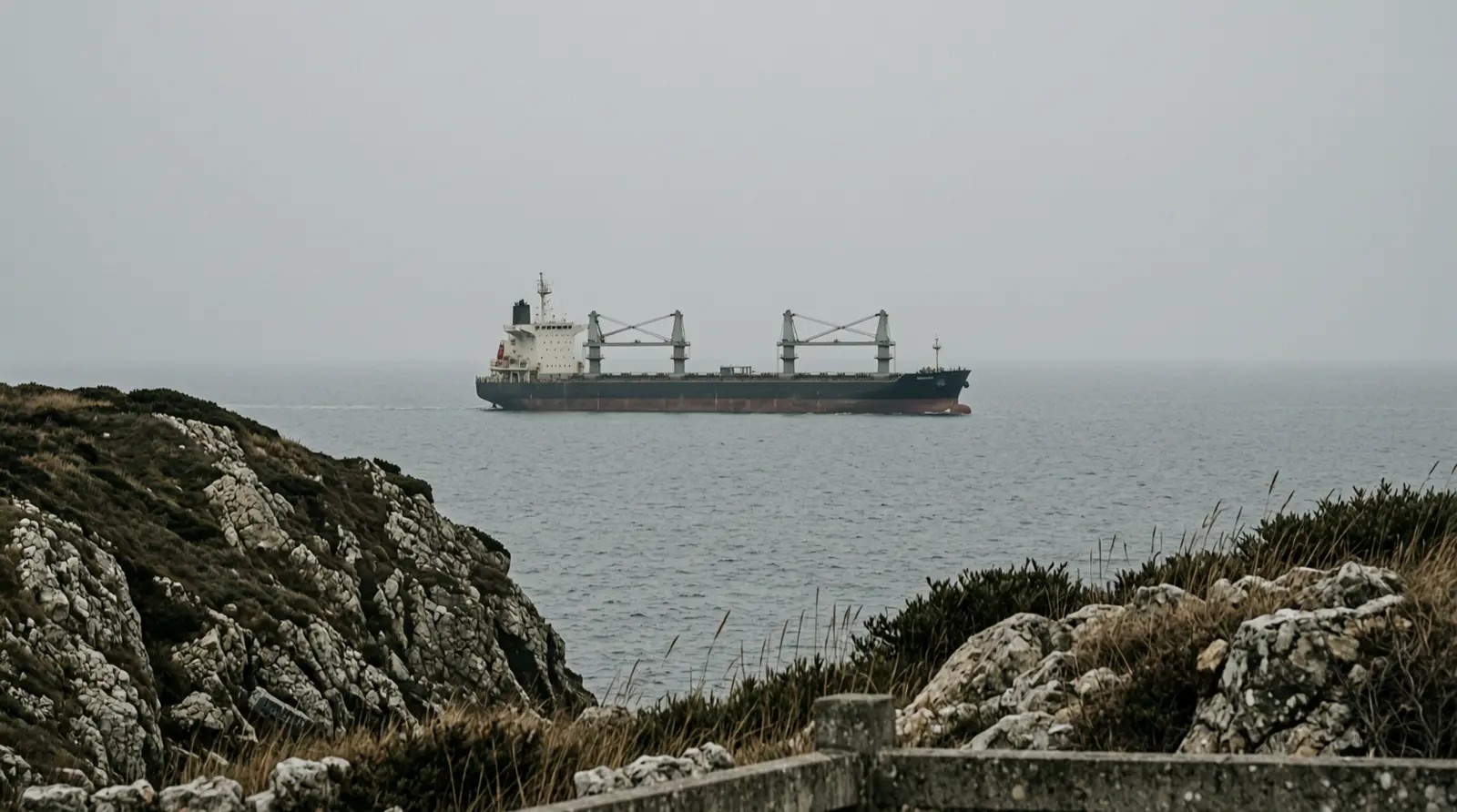
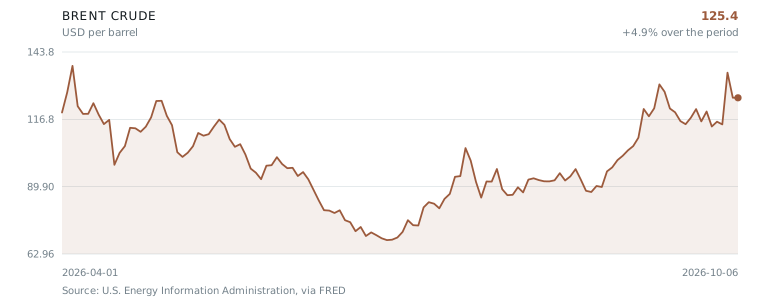
Brent and WTI were far apart on 6 October, with Brent at $125.44 and WTI at $96.24. The Conversation is asking whether markets are pricing the risk of a US diesel export ban, while diesel is being described as the current fuel-market problem. The issue is a question raised in commentary, not a confirmed policy move.
On 6 October, Brent crude stood at $125.44 and WTI at $96.24, a spread of about $29 per barrel. That gap is not just a number; it changes the arithmetic of moving fuel from the US Gulf coast to Europe or from the Atlantic basin to farther markets.
Henry Hub natural gas was $3.03 on the same day, a reminder that not every energy market is tight in the same way. Diesel is the fuel being singled out. The Conversation raised the question of whether the world is pricing the risk of a US diesel export ban, while diesel is being characterized as the current problem in fuel markets.
A wide spread redrawns the cargo map
A wide Brent-WTI spread usually makes US-linked barrels more competitive for export, because domestic crude is cheaper relative to international benchmarks. That matters for Gulf coast refiners that turn WTI-linked crude into diesel and ship it abroad. If exports were restricted, the advantage would not disappear; it would be trapped.
For a trader, the spread is a map. A narrow gap makes long-haul cargoes marginal; a wide one can make US barrels the cheap answer. If that answer is removed by policy, the map has to be redrawn quickly. The first casualty would be certainty about which refiner can supply which port, and on what date.
The market is not pricing a law; it is pricing a question.
The physical question is distance. If US diesel cargoes were curtailed, buyers would need to look to the Mediterranean, the Middle Gulf or Asia for replacement barrels. Each alternative adds days in transit, more freight exposure and different supply rhythms. A replacement cargo is not just a different seller. It is a different loading window, a different vessel size and a different arrival date.
A question, not a rule
The case for alarm is thinner than the price move might suggest. The basis is The Conversation raising the question of whether the risk is being priced. That is not a ban; it is a scenario. The market is not pricing a law; it is pricing a question.
A publication asking whether something might happen is not evidence that policymakers are moving toward it. It can still matter if traders use it as a hedge, but the burden of proof is higher. In physical markets, statements are cheap; fixtures, freight rates and vessel positions are dearer.
The spread itself also demands caution. Brent at $125.44 and WTI at $96.24 is an unusually wide gap. Such a gap can reflect real regional tightness, but it can also point to unusual contract conditions or a data issue that needs confirmation from physical trades. The most honest reading is that the market has two separate problems: a price gap and a missing policy trigger.
What diesel scarcity would do
If Washington were to restrict diesel exports, the first effect would be on replacement routes. US barrels that had been expected to leave the Gulf coast would need to be absorbed domestically or rerouted, while overseas buyers would bid for alternative cargoes. Freight would become part of the price.
Refining margins would be the second channel. Refiners with spare distillate capacity would gain leverage, while buyers with short cover would pay for prompt delivery. Consumer fuel costs would rise through transport charges, because trucks, barges and ships need diesel or closely related fuels.
The near-term indicator is physical behaviour, not rhetoric. Watch whether Atlantic diesel cargoes are fixed earlier, whether clean tanker rates rise and whether refiners shift runs to maximise diesel. If those movements appear while the policy question remains unresolved, the market is paying for insurance. If they do not, the scare may remain a headline. The open question is whether the next confirmation comes from a policy text or from a ship.
- 01Brent crude was $125.44 on 6 October.
- 02WTI crude was $96.24 on 6 October.
- 03Henry Hub natural gas was $3.03 on 6 October.
- 04The Conversation raised the question of whether markets are pricing a US diesel export ban.
- 05Diesel is being characterized as the current problem in fuel markets.
Interpretation, not reporting. The facts above carry their tiers; this is one correspondent’s reading of them.
The fragile part of this diesel story is not the price; it is the basis. Brent at $125.44 and WTI at $96.24 gives US-linked barrels an obvious export advantage, so a question about a US diesel export ban can move sentiment before any policy is confirmed. I would treat that as a scenario, not a signal. The Conversation raised the question; that is not a rule, and diesel's label as the current fuel-market problem is still a characterization rather than a measured stock change. What I would watch is physical: freight, cargo fixtures and the direction of replacement barrels. If buyers start pulling diesel from farther away and clean tanker rates firm, the market is paying for route risk. If those signs do not appear, the alarm looks thin. The $29 spread also makes me cautious, because it is wide enough to require confirmation from trade. If a policy text or actual restriction emerges, the story changes immediately.
— Tomás Ferreira
Every claim in this article, and what it rests on
We do not ask you to take our word for it. Each statement below carries its tier and its sources. Where sources disagree, you get both accounts and what would settle it.
Brent crude was 125.44 on 2026-10-06.
WTI crude was 96.24 on 2026-10-06.
Henry Hub natural gas was 3.03 on 2026-10-06.
The Conversation raised the question of whether the world is pricing the risk of a US diesel export ban.
Diesel is being characterized as the current problem in fuel markets.
The case against this story
Written by an adversarial reviewer, not the correspondent
The entire story rests on two pillars that are individually weak. First, the Brent price of 125.44 and the WTI price of 96.24 produce a spread of roughly $29 per barrel—a gap that is extraordinary and signals that at least one figure is likely wrong. If either price is off, the market-alarm narrative collapses. Second, the claim that a US diesel export ban is being 'priced in' rests not on any government policy statement, regulatory filing, or lawmaker announcement, but on a single outlet 'raising the question.' A publication asking whether something might happen is a far weaker basis than evidence that policymakers are actually considering it. The vague assertion that diesel is 'the current problem in fuel markets' is unattributed to any specific analyst, agency, or dataset. Together, these weaknesses mean the story could be amplifying a speculative framing rather than reporting a concrete development.
Who benefits from this framing: Energy traders and speculators holding long positions in diesel, gasoline, or crude oil benefit directly if readers believe markets are underpricing a diesel export ban and rush to bid up fuels. Domestic refiners and pipeline operators benefit from crisis framing that supports arguments for expanded refining capacity and reduced export restrictions. Political actors who gain from energy-security alarmism—whether pushing for more drilling, opposing current export policy, or criticizing an administration's energy agenda—also benefit from a public convinced that a diesel crisis and export ban are imminent.
Report an error in this article
Subscriptions open at launch
Global Materials Review will be a paid publication. Reading is free while we build the archive — leave an address and we will write to you once, when subscriptions open.