
Diesel release and Hormuz risk collide as tanker costs spike
A faster IEA diesel draw may add barrels, but attacks around Hormuz and costlier ships decide whether fuel reaches users.
 Tomás FerreiraEnergy, shipping and chokepoints
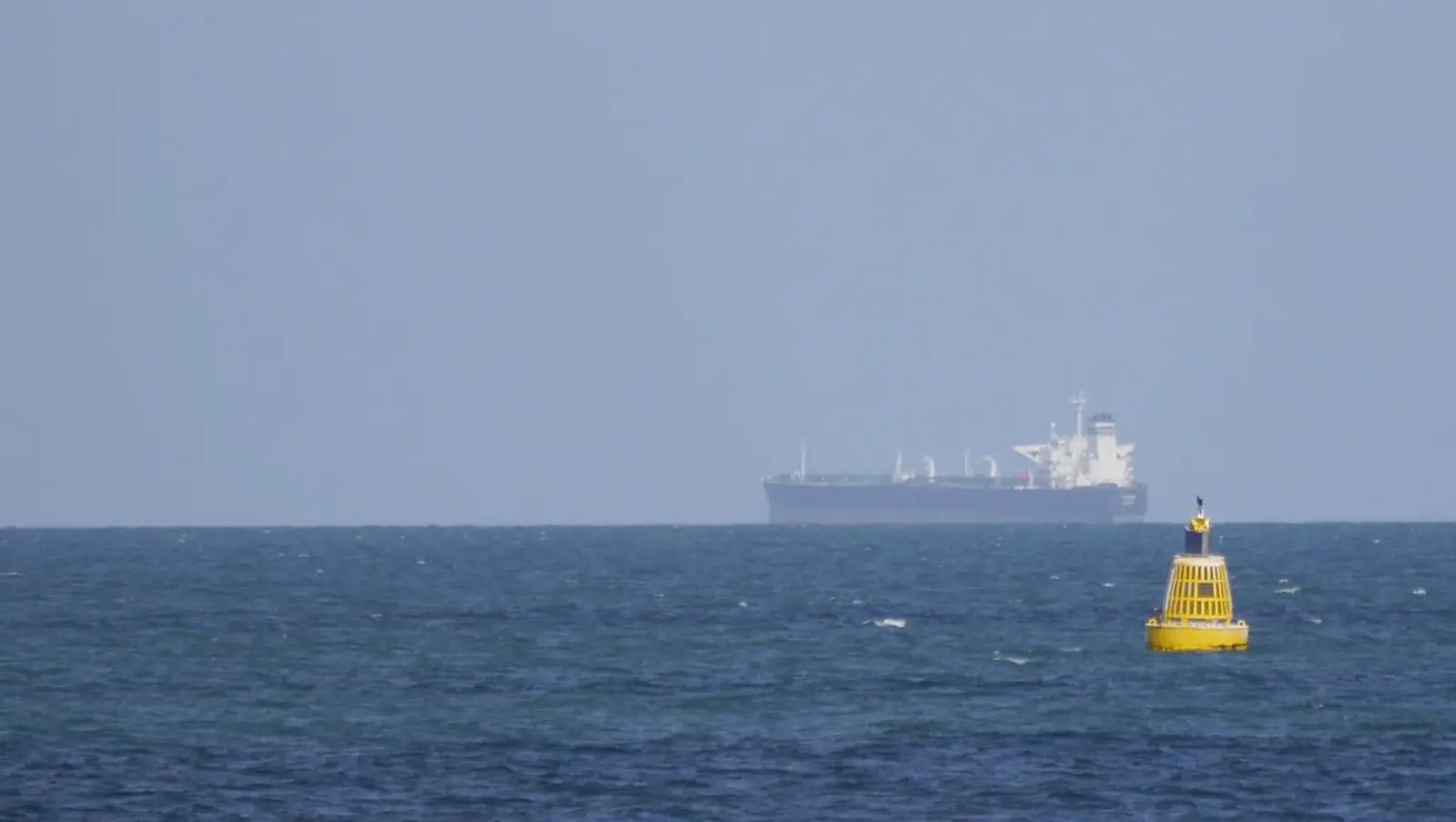
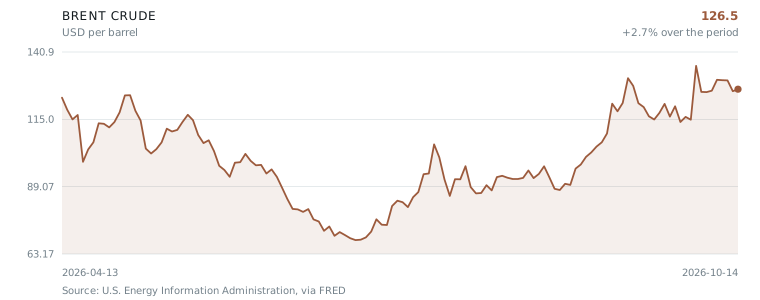
Brent was priced at $125.44 on 6 October while reports pointed to a faster IEA diesel release and higher attacks in the Strait of Hormuz. Tanker costs and bunkering availability are the near-term channels between security risk and physical fuel. The key uncertainty is whether announced barrels become delivered cargoes before freight and premiums adjust further.
A Brent print of $125.44 on 6 October is not, by itself, a shortage. But it has arrived alongside reports that the International Energy Agency will release more than 20 million barrels of diesel as soon as possible and accelerate the remainder of its emergency oil draw, while attacks in the Strait of Hormuz are said to have reached a new high.
The market is now trying to reconcile two opposite forces. An emergency diesel release should ease physical fuel balances if the barrels are in the right place, of the right specification, and can be lifted quickly. A spike in oil shipping costs does the opposite: it raises the cost of moving each barrel and makes distant supply less competitive for buyers close to the risk zone.
The security backdrop is widening. Houthis reportedly targeted Yemen's presidential palace in Aden with missiles, and Saudi Arabia has reportedly accused Iran of encouraging Houthi attacks on Riyadh. Those reported accusations and strikes matter to commodities because they raise the chance that disruptions move from isolated incidents to repeated route risk.
A price point needs a trend
The clearest hard number is Brent at $125.44 on 6 October. That is a high level for physical buyers, but one date does not show whether the market stayed there, faded, or spiked for a few hours. The difference matters: a sustained price at that level would change term contracts, hedging and cargo economics; a single print may only show a thin, nervous session.
The thing to watch is whether announced diesel barrels turn into visible cargoes and whether tanker costs keep rising after the initial security headlines.
Equally, reports of ship attacks in the Strait of Hormuz hitting a new high need a historical baseline to be judged. Without it, the phrase tells traders that risk is rising, but not whether it is unusual, persistent, or concentrated in certain vessel classes.
Tanker costs carry the risk
Oil shipping costs have reportedly spiked, and that is where the physical market feels military risk first. When underwriters, shipowners and charterers see greater danger in a waterway, they do not wait for a formal closure. They price the voyage higher, demand more compensation, or choose longer routes. If the passage becomes harder to use, cargoes must wait, reroute or be repriced; the detour is measured in days and higher freight. The Strait of Hormuz is not an abstraction: it is the passage for Gulf crude and products, and any hesitation there affects the number of ships available, the days spent at sea, and the cost of delivering fuel to ports.
If the ship fuel market is fragmenting, as one account says, the effect is more granular. Buyers may face different prices and quality for bunkers depending on port, supplier and delivery window. That can push operators to carry more fuel, avoid certain refuelling stops, or pay for assured supply. Each response uses more working capital and tightens the near-term diesel and fuel-oil balance.
Diesel barrels are not the same as delivered supply
The reported IEA action adds a supply lever. If the agency releases more than 20 million barrels of diesel — a volume that can matter if it is close to demand, but not one that replaces continuous shipments — and accelerates the rest of its emergency draw, the intended effect is to bridge a gap while shipping and production adjust. But emergency stocks are not instantly consumed. They must be transferred, transported, blended or used in place of other cargoes. The time between an announcement and a cargo reaching a burner, truck depot or power plant can be the period when prices stay volatile.
The political layer complicates this. The reported Saudi accusation against Iran and reported Houthi missile activity near Aden raise the possibility of wider disruption, even if no direct link to the latest market moves is established. Traders do not need proof of a full closure to pay for optionality; they need only enough uncertainty to make a shipowner, insurer or buyer act as if the route could become harder.
The stronger case for caution is that several of these pieces are not yet confirmed physical facts. The IEA volumes and acceleration are forward-looking. The attack record may lack a clear baseline. The Brent figure is a single date. Higher freight and fragmented bunkering can reflect local disruption without proving that the military events caused the diesel market to tighten. In that reading, the story is a set of concurrent pressures, not a single chain reaction.
The thing to watch is whether announced diesel barrels turn into visible cargoes and whether tanker costs keep rising after the initial security headlines. If freight stays elevated while the release is still moving through paperwork, the physical market will remain tight even if the headline price retreats.
- 01Brent was priced at $125.44 on 6 October.
- 02Reports say the IEA will release more than 20 million barrels of diesel quickly.
- 03Reports say the IEA will accelerate the remainder of its emergency oil draw.
- 04Houthis reportedly targeted Yemen's presidential palace in Aden with missiles.
- 05Oil shipping costs have reportedly spiked while Hormuz attacks are said to have reached a new high.
Interpretation, not reporting. The facts above carry their tiers; this is one correspondent’s reading of them.
The pressure point is logistics, not headlines. If the International Energy Agency really releases more than 20 million barrels of diesel quickly, the effect depends on where those barrels sit, what specification they are, and how fast ships can lift them. A Brent print of $125.44 on 6 October tells me the market is willing to pay for risk, but one date does not make a trend. The more telling signal is the reported spike in tanker costs and the talk of a fragmenting ship fuel market: when availability and quality become uncertain, operators pay for certainty and pass the cost through freight. I would watch whether attacks around Hormuz stay limited or widen, and whether the release becomes visible cargoes. If tanker costs stay high while barrels are still moving through paperwork, physical premiums can remain firm even if the price retreats. What would change my view is simple: confirmed volumes, visible cargoes and freight rates stabilising.
— Tomás Ferreira
Every claim in this article, and what it rests on
We do not ask you to take our word for it. Each statement below carries its tier and its sources. Where sources disagree, you get both accounts and what would settle it.
Brent crude was priced at $125.44 on 2026-10-06.
The International Energy Agency will release more than 20 million barrels of diesel as soon as possible.
The International Energy Agency will accelerate the remainder of its emergency oil draw.
Houthis targeted Yemen's presidential palace in Aden with missiles.
Saudi Arabia accused Iran of encouraging Houthi attacks on Riyadh.
Ship attacks in the Strait of Hormuz have hit a new high.
Oil shipping costs have spiked.
The ship fuel market is fragmenting as Middle East conflict disruptions raise concerns about availability and quality.
The case against this story
Written by an adversarial reviewer, not the correspondent
The story assembles a chain of escalation—Houthi missile strikes, Saudi-Iranian accusations, Strait of Hormuz attack records, shipping cost spikes, market fragmentation, a specific Brent price, and IEA emergency action—into a single coherent narrative of systemic crisis. But the load-bearing claims are either unconfirmed predictions (IEA diesel release volumes, acceleration of emergency draws), superlatives lacking historical baselines ('new high' for ship attacks), or analytical judgments overstated as observed conditions ('fragmenting' ship fuel market). The precise Brent price of $125.44 on a single date may be a cherry-picked intraday data point rather than a representative settlement. No claim in the set demonstrates a causal link between the political/military events and the market movements; the story implies causation through juxtaposition. Strip away the predictive and interpretive claims and the remaining factual core—missiles near Aden, a Saudi diplomatic accusation, some shipping disruption—does not by itself sustain the sweeping crisis framing the story presents.
Who benefits from this framing: Oil traders and commodity speculators benefit directly from a reader accepting a crisis narrative, as fear-driven positioning widens spreads and creates arbitrage opportunities. Energy producers benefit from any framing that normalizes sustained triple-digit crude prices and builds public tolerance for high retail fuel costs. Defense and national security interests benefit from escalation framing that builds political support for military posture or intervention in the Middle East. Finally, any actor holding short positions in shipping or refining equities benefits from a reader believing that fragmentation and supply disruption are already underway rather than merely feared.
Report an error in this article
Subscriptions open at launch
Global Materials Review will be a paid publication. Reading is free while we build the archive — leave an address and we will write to you once, when subscriptions open.