
Cheap wind and worthless Permian gas test power margins
If the New England wind jump and negative Waha prices hold, gas-fired generators and producers face different kinds of pain before third-quarter earnings.
 Tomás FerreiraEnergy, shipping and chokepoints
Henry Hub at $3.03 on 6 October looks calm, but the same-day Brent-WTI gap is $29.20. A disputed 68% rise in ISO-NE wind and reports of negative Permian gas prices could reshape regional power and producer margins. The key question is whether the numbers hold up before third-quarter earnings.
A $3.03 Henry Hub print on 6 October looks placid next to Brent at $125.44, but the more telling gap is the $29.20 between Brent and WTI. That spread, calculated from the same-day figures, is large enough that any oil-cost narrative for power and industrial users needs both prints confirmed. The benchmark gas price is the anchor; the crude gap is the caution.
A calm gas benchmark, a wide crude split
The same-day numbers put WTI at $96.24, well below Brent. For a gas story, Henry Hub is the direct input: it is the reference for fuel costs, not crude. But oil matters to power margins when oil-linked fuels or global energy tightness set the outer bounds. If one crude print is off, the backdrop changes.
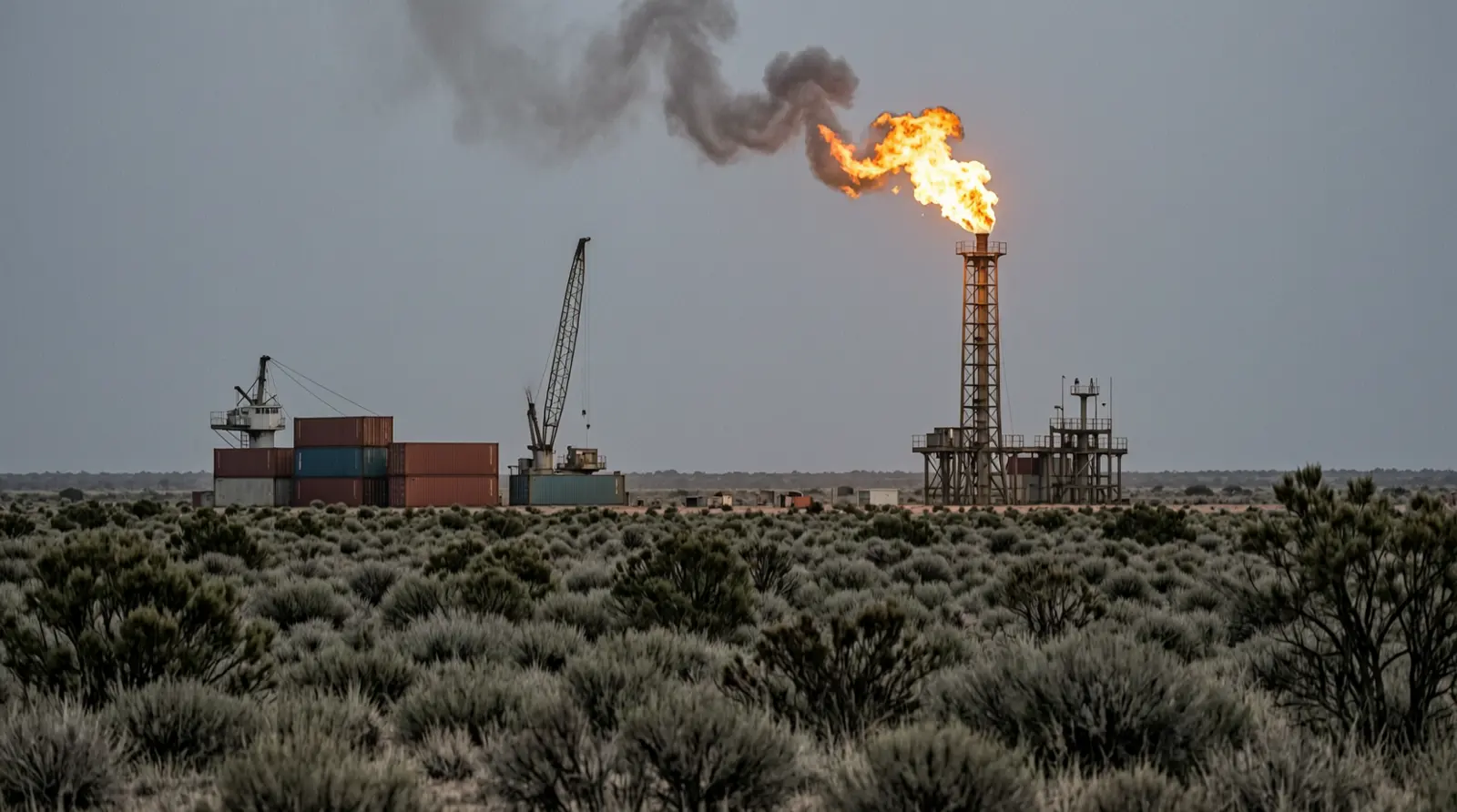
The immediate question for gas-fired generators is whether regional fuel costs follow the calm Henry Hub or the stress in the Permian. If associated gas is so unwanted that producers pay to move it, the physical market is not clearing through price alone. That points to takeaway constraints, not a simple abundance story.
New England wind is the swing number
New England adds the second lever. The figure in circulation is that monthly wind generation in ISO-NE during the first nine months of 2026 averaged 68% higher than in the same period of 2025. Proponents of the surge thesis treat that as a structural shift in regional generation. Skeptics ask whether it reflects newly commissioned nameplate capacity, partial monthly data, or a genuine increase in delivered energy.
Negative prices are not a normal discount; they are a disposal fee.
The difference matters because wind displaces gas burn at the margin. A 20-30% increase would still help, but a 68% increase would change the number of hours gas units run and the amount of fuel the region needs. Until monthly records settle the scale, the New England part of the story is a range, not a point estimate.
For power markets, the channel is simple: more wind can reduce gas demand, but it can also press power prices when the wind is blowing. The margin effect depends on which side moves faster. That is why the generation number, not the installed-capacity story, is the one to verify.
Permian gas is being treated as waste
The Permian evidence is more physical and less settled. Reports from the basin describe producers spending much of the year paying buyers to haul away natural gas produced with oil. The same accounts say Waha Hub spot prices stayed below zero for a record 90 days.
Negative prices are not a normal discount; they are a disposal fee. They tell a producer that the gas is a liability at the point of delivery. If that condition persists, the response is not simply to sell more gas; it is to curtail, flare where permitted, or accept lower realized oil economics.
The spatial problem is the point. Permian gas needs pipes, processing and demand; when one of those links fails, the barrel of oil can still be sold, but the associated gas becomes a routing problem. A negative price is the market paying for a detour.
The tension for third-quarter earnings is that Brent at $125.44 and WTI at $96.24 can make oil-directed drilling look attractive while associated gas drags on realized value. A producer can be drilling for oil and still face a gas problem. The question is whether the negative Waha stretch was long enough to force operational changes.
The open item is verification. The oil spread needs both prices confirmed. The ISO-NE wind figure needs monthly records. The Permian negative-pricing accounts need to be weighed against pipeline and processing constraints. Until then, the market is being asked to price three different stresses with one calm Henry Hub number.
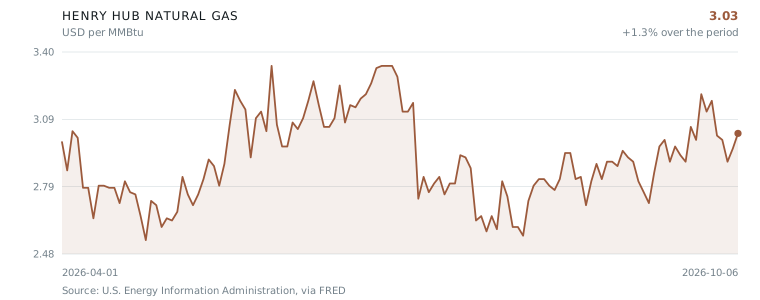
- 01Henry Hub natural gas was $3.03 on 6 October.
- 02Brent was $125.44 and WTI $96.24 on the same day, a $29.20 spread.
- 03The ISO-NE wind figure under debate is a 68% average increase for the first nine months of 2026 versus 2025.
- 04Basin reports describe Permian producers paying buyers to haul away associated gas.
- 05Waha Hub spot prices are reported to have stayed below zero for a record 90 days.
Interpretation, not reporting. The facts above carry their tiers; this is one correspondent’s reading of them.
The spread that matters is not just Brent over WTI; it is local gas trapped in the Permian against benchmark gas at $3.03. I would treat the 68% ISO-NE wind figure as the swing variable: if primary monthly records confirm it, New England gas burn has less room, and gas-fired margins depend more on whether cheap wind depresses power prices faster than it cuts fuel costs. If the real increase is smaller, the story becomes less about renewables and more about a familiar regional constraint. The Permian accounts are the most physical: if producers really paid buyers to take associated gas and Waha stayed below zero for 90 days, that is not a normal price signal but a disposal problem. What would change my mind is simple: a confirmed narrow Brent-WTI spread would weaken the high-oil-cost frame, and a smaller verified wind increase would shrink the New England displacement. Until those checks clear, I would watch transport, not headlines.
— Tomás Ferreira
Every claim in this article, and what it rests on
We do not ask you to take our word for it. Each statement below carries its tier and its sources. Where sources disagree, you get both accounts and what would settle it.
The Henry Hub natural gas price was $3.03 on 2026-10-06.
The Brent crude price was $125.44 on 2026-10-06.
The WTI crude price was $96.24 on 2026-10-06.
Monthly wind generation in ISO-NE during the first nine months of 2026 averaged 68% higher than in the same period of 2025.
Permian producers spent much of the year paying buyers to haul away natural gas produced with oil.
Waha Hub spot prices stayed below zero for a record 90 days.
The case against this story
Written by an adversarial reviewer, not the correspondent
The story paints a picture of dramatic energy-market dislocation: surging New England wind, Permian gas so worthless producers pay to dispose of it, and oil prices at elevated levels globally. But two of its load-bearing pillars look shaky. First, the Brent and WTI prices cited for the same day imply a roughly $29 per barrel spread—far outside historical norms and suggestive of a possible data error in one or both figures. If the true spread were a more typical $3–8, one or both oil-price claims would be materially wrong, undermining the high-price-oil narrative. Second, the 68% jump in ISO-NE wind generation is large enough that it could easily reflect newly commissioned nameplate capacity coming online rather than actual delivered energy, or could be derived from partial monthly data that overstates the trend. If the real increase were, say, 20–30%, the 'surging renewables' storyline loses much of its force. The Permian negative-pricing claims, while plausible given known pipeline constraints, are tiered lower for good reason and cannot carry the narrative alone.
Who benefits from this framing: Renewable energy advocates and policymakers pushing clean-energy mandates benefit from the wind-generation surge narrative, which supports arguments for accelerated renewable deployment and subsidy extension. Pipeline developers and midstream infrastructure companies benefit from the Permian negative-pricing story, which is routinely deployed to lobby for new gas pipeline permits and capacity. US oil producers benefit from high Brent prices being presented as established fact, which can justify investment decisions and support arguments for increased drilling. Energy traders and speculators benefit if market participants act on potentially inaccurate price data, creating arbitrage opportunities. Fossil-fuel critics benefit from the framing that producers are 'paying buyers to haul away' gas, which reinforces arguments about the waste and inefficiency of associated gas flaring and pipeline under-build.
Report an error in this article
Subscriptions open at launch
Global Materials Review will be a paid publication. Reading is free while we build the archive — leave an address and we will write to you once, when subscriptions open.