
Black Sea tanker fires meet a fractured bunker market
A Black Sea casualty and a fragmented bunker market are raising separate but overlapping costs for ship operators.
 Tomás FerreiraEnergy, shipping and chokepoints
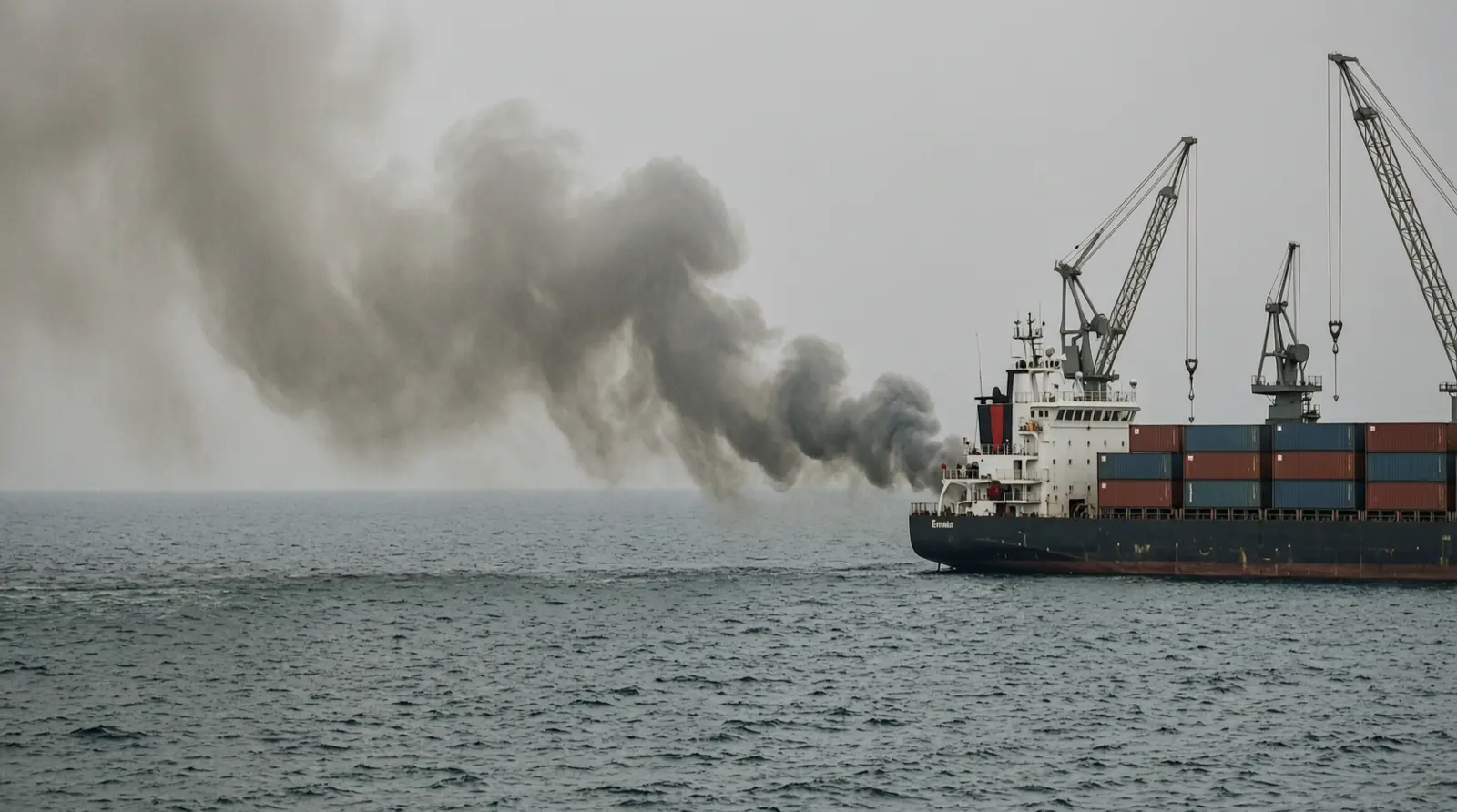
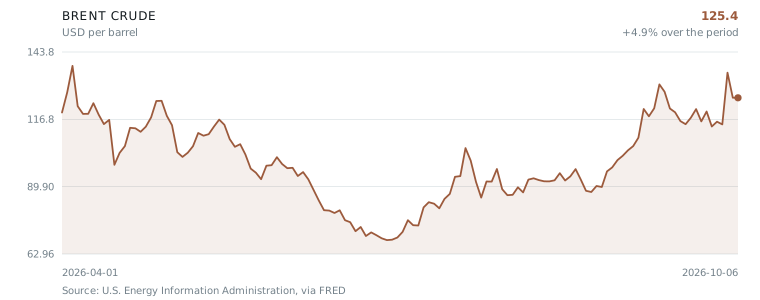
Two chemical tankers caught fire overnight in the Black Sea just outside Romanian territorial waters, and rescuers were searching on Thursday for missing crew. Reports differ on whether seven or eight people are missing. Separately, shipowners face a fragmented ship fuel market and Middle East-related concerns over availability and quality, while Brent crude stood at $125.44 on 6 October.
Two chemical tankers caught fire in the Black Sea overnight, just outside Romanian territorial waters, and rescuers were searching on Thursday for missing crew from one of the vessels. The basic facts are still moving. One account puts the number missing at seven; another says eight. Until the crew list is reconciled, the incident is a search-and-rescue operation first, not a market signal.
The location matters because the western Black Sea sits close to Romanian ports and busy coastal routes, but the available reports do not establish what caused the fires. Collision, mechanical failure, cargo handling or human error remain possible explanations. That uncertainty is important: a casualty can raise insurance and routing attention even before anyone knows why it happened.
Rescue, salvage and the first cost line
For ship operators, the immediate sequence is practical. Search assets go into the water, salvors assess the vessels, and insurers start asking whether the loss is a one-off accident or a pattern. If underwriters decide the area has become riskier, the channel is familiar: higher risk premia, more questions about voyage plans and, in some cases, owners choosing routes that avoid the affected patch of sea.
The two vessels were chemical tankers, a class that tends to draw extra scrutiny because cargo handling is more complex than with crude alone. The available reports do not say whether cargo was lost or whether pollution occurred. That absence matters as much as the fire itself. Without evidence of a spill, a blocked fairway or a repeat incident, the event remains a local maritime casualty rather than a supply disruption.
The fires are a casualty; the bunker market is a procurement problem.
The crude market backdrop is separate. Brent crude was $125.44 on 6 October. That price may shape freight economics, but it does not explain the fires, and the fire reports do not establish a problem with bunker fuel. The two stories meet in the same region, not necessarily in the same cause.
A bunker market already split
The second story is less dramatic but more persistent. Shipowners are facing an increasingly fragmented ship fuel market, one industry account says. Fragmentation means that fuel is not simply a single global product that can be bought identically in every port. Availability, specification and supplier reliability can differ, and procurement teams respond by testing, switching suppliers or allowing more time for bunkering.
Middle East conflict-related disruptions have raised concerns about ship fuel availability and quality, that account adds. Those concerns work through a simple channel: if a region that supplies fuel or feeds fuel flows becomes uncertain, buyers look elsewhere, and the alternatives may be thinner, more expensive or less consistent. For a vessel operator, the result is not abstract. A bunker stem may need to be arranged earlier, a different port may need to be considered, and a change in fuel quality can require more careful handling.
None of this requires the Black Sea fires to be connected. The fires are a casualty; the bunker market is a procurement problem. The fires may prove to be an isolated accident. The bunker market, however, is already forcing shipowners to think about where fuel can be bought safely and reliably. When a casualty occurs near a corridor that is already under commercial pressure, the market tends to ask whether the risk is additive.
What to watch next
The first test is factual: reconcile the missing-crew accounts and determine whether all crew are accounted for. The second is whether salvage operations reveal cargo or pollution damage. The third is whether insurers and charterers treat the incident as a local event or as a reason to reroute around the affected area.
The fuel-side question is equally concrete. If Middle East-related disruption fears continue to shape bunker procurement, shipowners will keep diversifying supply and building extra time into voyages. If the missing-crew count settles and no wider hazard emerges, the Black Sea fires may remain a tragic but contained incident. The open question is whether the two pressures stay separate in the minds of underwriters and operators.
- 01Two chemical tankers caught fire in the Black Sea.
- 02Reports differ on missing crew, with seven or eight listed.
- 03The vessels were just outside Romanian territorial waters.
- 04Shipowners face a fragmented ship fuel market.
- 05Brent crude was $125.44 on 6 October.
Interpretation, not reporting. The facts above carry their tiers; this is one correspondent’s reading of them.
The market is likely to treat these as separate risks until evidence says otherwise. I would not fold the Black Sea fires into a fuel-quality story without a cause, but I also would not dismiss the way two pressures can compound in a shipowner's operating calculus. Burning chemical tankers near Romania raise salvage, insurance and routing questions. A fragmented bunker market raises procurement questions. If underwriters see the casualty as part of a pattern, premia can rise even while the fuel market remains unrelated. If fuel availability concerns persist, operators may already be paying for extra time, testing and alternative stems. The thing to watch is not a single dramatic link; it is whether the incident changes behaviour. If the missing-crew count is reconciled, no pollution emerges and rerouting does not follow, the fires stay a local tragedy. If bunker stems become harder to arrange or quality disputes widen, the cost pressure becomes commercial. Brent at $125.44 makes every inefficiency more expensive to absorb. My view: the risks are additive only if operators and insurers start treating them as one corridor problem.
— Tomás Ferreira
Every claim in this article, and what it rests on
We do not ask you to take our word for it. Each statement below carries its tier and its sources. Where sources disagree, you get both accounts and what would settle it.
Two chemical tankers caught fire in the Black Sea.
Brent crude was $125.44 on 2026-10-06.
The reports gave different missing-crew counts, with one saying seven missing and another saying eight missing.
The burning tankers were just outside Romanian territorial waters.
The tanker fires occurred overnight.
Rescuers were searching on Thursday for missing crew from one of the two tankers.
Shipowners are facing an increasingly fragmented ship fuel market.
Middle East conflict-related disruptions raised concerns about ship fuel availability and quality.
The case against this story
Written by an adversarial reviewer, not the correspondent
The story's overall picture welds two unrelated narratives together: a specific maritime incident (two tankers ablaze in the Black Sea, crew missing, rescuers searching) and a set of energy-market observations (fragmented fuel markets, Middle East disruption fears, a Brent crude price). No claim in the story establishes a causal link between the tanker fires and fuel-quality or fuel-availability problems. The fires could have been caused by collision, mechanical failure, cargo incompatibility, or human error—none of which would implicate the fuel market. By placing a dramatic, emotionally charged incident next to market analysis and a precise oil price, the framing invites the reader to infer that the fires are a symptom of a broader energy crisis, when the evidence supplied supports no such connection. The conflicting missing-crew counts (seven versus eight) further show that even the basic facts of the incident are still in flux, yet the story already pivots to macro-level market commentary as though the incident's significance is settled.
Who benefits from this framing: Energy traders and commodity speculators benefit from any framing that links a dramatic supply-chain incident to broader fuel-market anxiety, because fear drives price volatility they can trade on. Parties with an interest in attributing Black Sea or Eastern Mediterranean disruptions to Middle East tensions—whether defence contractors, sanctions advocates, or geopolitical actors seeking to justify naval presence in the region—gain from narratives that fold a localised accident into a regional conflict story. Shipping insurers and bunker-fuel suppliers benefit from heightened risk perception, which supports premium increases and tighter fuel-specification mandates. Alternative-fuel advocates benefit from public concern about conventional marine fuel quality and fragmentation.
Report an error in this article
Subscriptions open at launch
Global Materials Review will be a paid publication. Reading is free while we build the archive — leave an address and we will write to you once, when subscriptions open.