
A wide Brent-WTI spread leans on thin incident reports
If the reported incidents are local and unverified, the oil market's risk premium may be priced to a disruption that has not been shown.
 Tomás FerreiraEnergy, shipping and chokepoints
Brent and WTI finished 14 October with a wide gap, while reports of drone and pipeline incidents circulated around Saudi Arabia and Syria. The price arithmetic implies a large supply fear, but the incident details available so far are local and unverified. Henry Hub natural gas was far calmer at 3.22.
On 14 October, Brent stood at 126.55 and WTI at 101.91. That is a spread of 24.64 between the two benchmarks, a wide gap for a week in which the physical damage described is limited and largely unconfirmed. The market is being asked to connect crude prices to incidents across Syria and Saudi Arabia, but the chain is not yet visible.
Henry Hub natural gas was at 3.22 on the same day. That gives a useful contrast: one energy benchmark is elevated, while another is not showing the same stress.
A spread that needs a physical story
The prices are plain. Brent at 126.55 and WTI at 101.91 are figures that can be checked against the tape. The harder part is the mechanism. A wide Brent-WTI gap needs a reason tied to barrels, not just reports of damage. The spread, not the damage, is the number that needs explaining.
The reported incidents do not yet add up to that kind of disruption. Houthi attacks on Saudi Arabia are reported, and Saudi Arabia is reported to have downed a drone in its Eastern Province. Neither comes with a cited statement or an incident report in the material available.
The spread, not the damage, is the number that needs explaining.
Syria's leaks and Saudi air defence
In Syria, two pipelines are reported damaged amid what is described as a spate of attacks on energy infrastructure. The Baniyas-Homs pipeline leak was linked to fuel theft, according to the account provided. A gas export line in Hasakah also caught fire, the same set of reports says.
These are different kinds of events. A leak attributed to theft is a local loss, not necessarily a halt to flows. A fire on a gas export line can matter if the line carries volumes to market, but the scale and duration are not established. The difference between a local incident and a market event is scale. A pipeline leak can be repaired without changing exports. A fire can burn out without stopping deliveries. The reports do not say whether any flow was interrupted.
The Eastern Province drone report is part of the same risk picture, but no loss is confirmed. For a physical market, the question is not whether an incident happened somewhere, but whether it changes flows. So far, the reports describe risk around infrastructure, not a measured loss of barrels.
What the risk premium is buying
If the reports were confirmed and larger than they appear, the channel would run through fear of further attacks rather than immediate supply loss. Traders would price the possibility that a drone, a damaged pipeline or a fire becomes a larger supply problem. That is how a geopolitical premium forms: not only from missing supply, but from the cost of being wrong about the next hit.
But the arithmetic still presses. A Brent-WTI spread above 24 is not explained by a fuel-theft leak or a local gas-line fire on its own. It points to a broader concern about supply, or to a price set by fear rather than verified damage. The gap between the two crude prices is therefore the main fact to watch.
A risk premium can stay while traders wait for confirmation. It can also vanish when the confirmation does not arrive. The test is whether the next price move is tied to a verifiable change in infrastructure.
The open question is simple: will any of these incidents be confirmed at a scale that changes physical flows? If they are not, the premium embedded in Brent may be resting on a narrative that the evidence has not yet supplied.
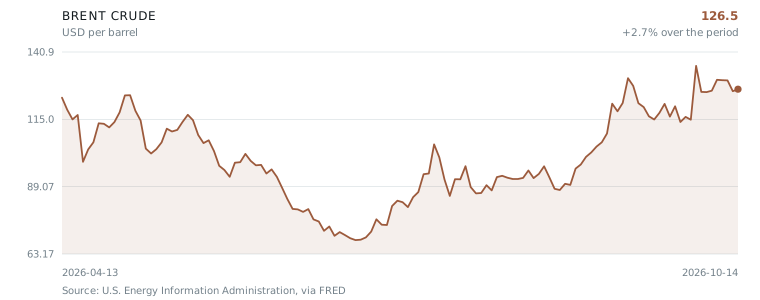
- 01Brent was 126.55 on 14 October.
- 02WTI was 101.91, leaving a spread of 24.64.
- 03Henry Hub natural gas was 3.22 on the same day.
- 04Reports describe Houthi attacks on Saudi Arabia and a downed drone in the Eastern Province.
- 05Reports also describe damaged Syrian pipelines, a Baniyas-Homs leak linked to fuel theft and a Hasakah gas-line fire.
Interpretation, not reporting. The facts above carry their tiers; this is one correspondent’s reading of them.
The burden of proof sits with the price, not the headlines. Brent at 126.55 and WTI at 101.91 imply a spread of 24.64, and I cannot square that with incidents that remain unconfirmed and local in scale. If Houthi attacks on Saudi Arabia and a downed drone in the Eastern Province were material, they would need to be tied to facilities, flows or exports. If the Syrian pipeline damage, the Baniyas-Homs leak and the Hasakah fire were large enough to move global crude, the mechanism would need to run through exportable barrels. At present, the reports do not establish that route. My working assumption is that the market is pricing fear of a wider energy-infrastructure event, not the listed damage. I would watch for confirmation of any Saudi export impact, any change in physical flows, and whether the Brent-WTI gap persists. If none appears, the premium looks fragile.
— Tomás Ferreira
Every claim in this article, and what it rests on
We do not ask you to take our word for it. Each statement below carries its tier and its sources. Where sources disagree, you get both accounts and what would settle it.
The Brent crude price was 126.55 on 2026-10-14.
The WTI crude price was 101.91 on 2026-10-14.
The Henry Hub natural gas price was 3.22 on 2026-10-14.
Houthi attacks on Saudi Arabia have occurred.
Saudi Arabia downed a drone in its Eastern Province.
Two Syrian pipelines were damaged amid a spate of attacks on energy infrastructure.
Fuel theft was cited in the Baniyas-Homs pipeline leak.
A gas export line in Hasakah caught fire.
The case against this story
Written by an adversarial reviewer, not the correspondent
The story strings together a Houthi attack on Saudi Arabia, a downed drone in Saudi Arabia's Eastern Province, two damaged Syrian pipelines, a Baniyas-Homs pipeline leak blamed on fuel theft, and a gas export line fire in Hasakah, then caps the cascade with crisis-level oil prices (Brent at 126.55, WTI at 101.91). The strongest case against this picture is arithmetic: the implied Brent-WTI spread of over $24 has no historical precedent in normal market conditions and would require a named, sourced structural disruption to explain—none is offered. Every infrastructure-attack claim is presented without a cited statement, incident report, or news dispatch. The narrative reads as a causal chain (attacks → supply fear → price spike) that may not exist: pipeline leaks attributed to fuel theft and a gas line fire in northeast Syria are local incidents that do not normally move global Brent by tens of dollars. Strip out the unsourced attack claims and the price figures collapse under their own internal inconsistency.
Who benefits from this framing: Energy-market speculators and commodities traders who profit from volatility and panic buying benefit if readers accept crisis-level pricing as established fact. Defense contractors and security firms benefit from a narrative of escalating Middle East infrastructure attacks requiring military or security responses. Political actors who favour interventionist policy or who want to justify domestic energy-production expansion benefit from a framing that makes regional instability appear to be driving an imminent supply shock.
Report an error in this article
Subscriptions open at launch
Global Materials Review will be a paid publication. Reading is free while we build the archive — leave an address and we will write to you once, when subscriptions open.